
Martin
Stará sovětská škola je přístupné jako muzeum.



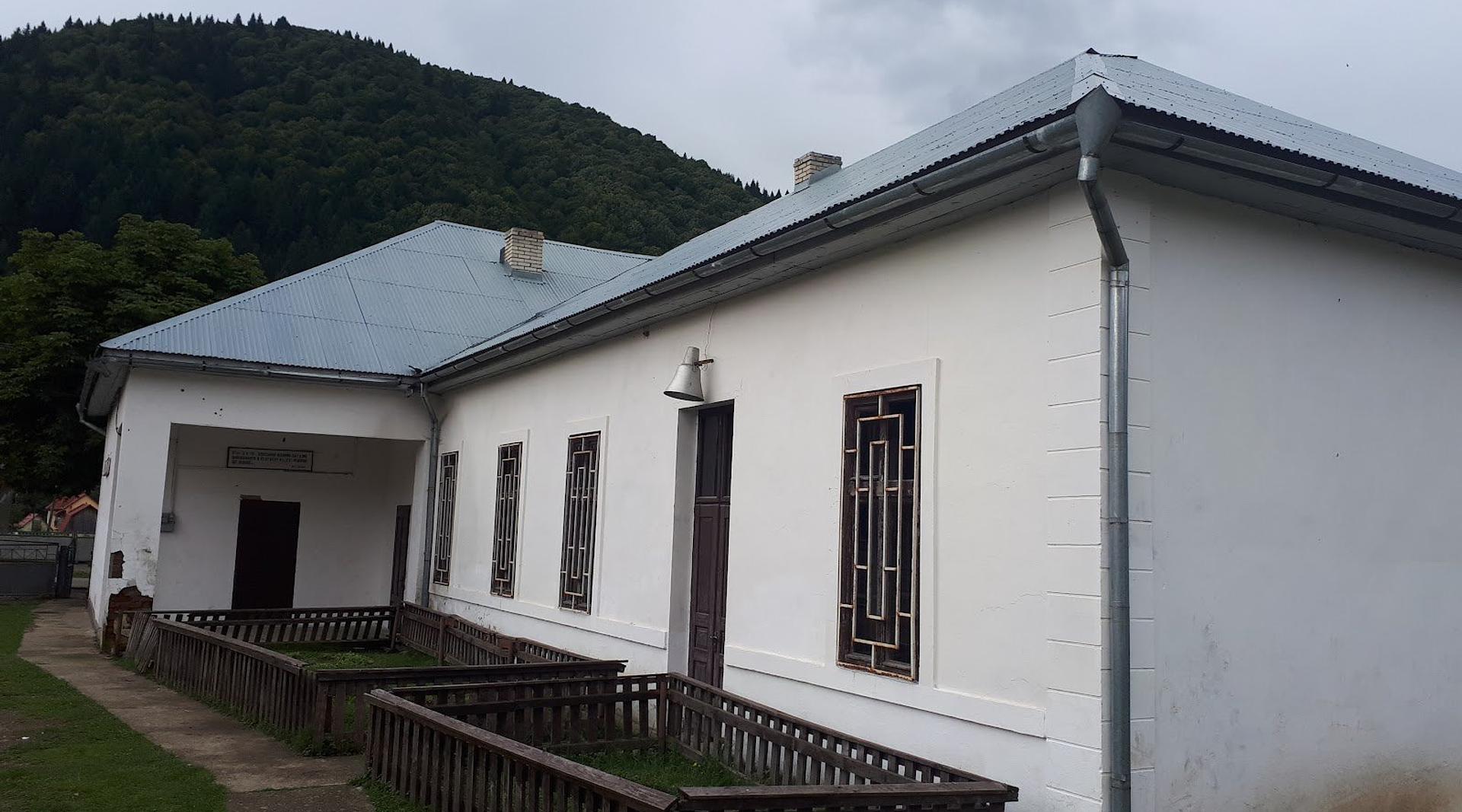
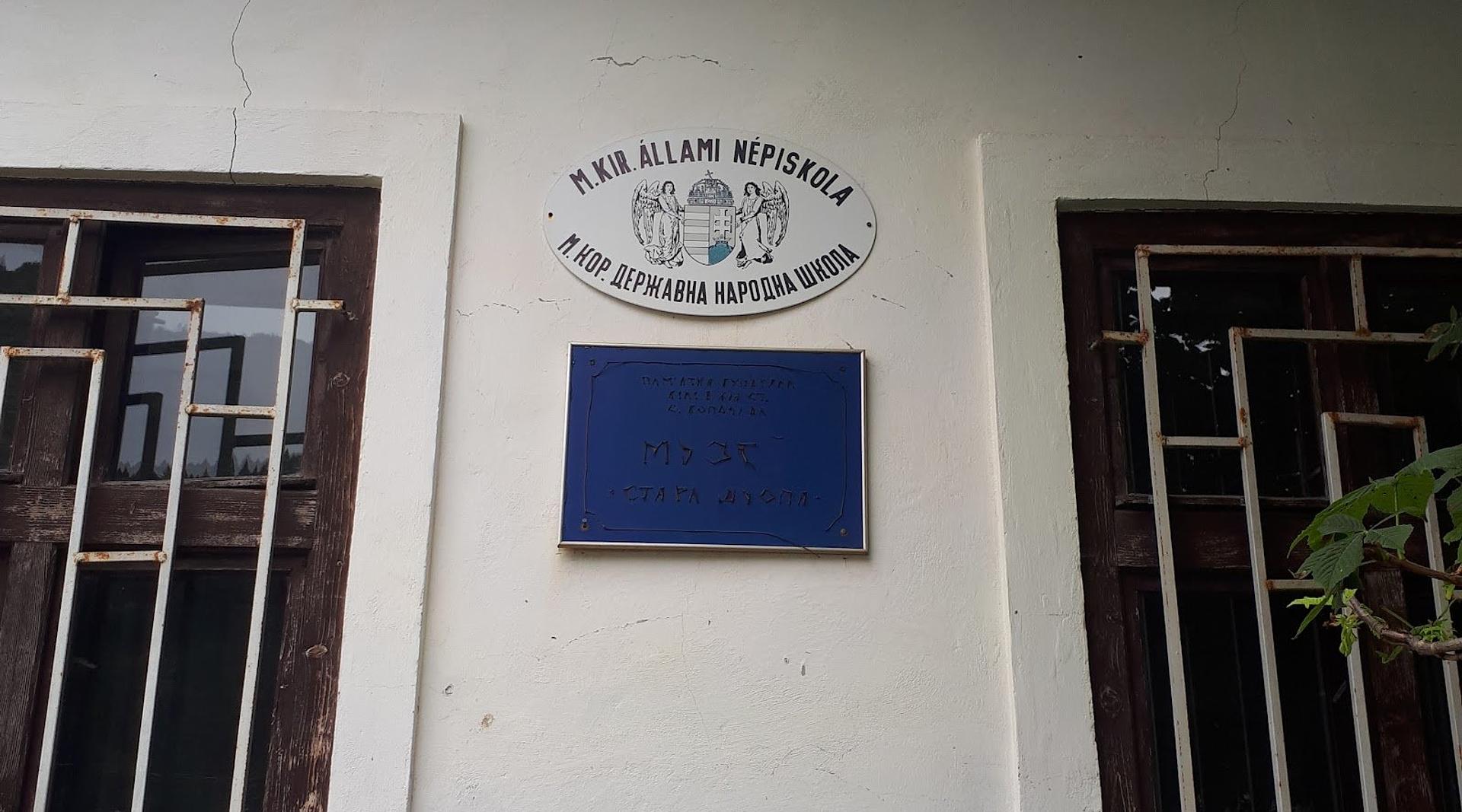
The schoolhouse on vul. Tarasa Shevchenka opened in 1899 as a Hungarian Royal State School — Kolochava's first state school, in a village where the only classroom until then had belonged to the church. It went on teaching through three changes of state, closed in 1978 when a new school opened in the centre, and reopened in 2006 as a museum of what had gone on inside it.
Two classrooms now sit under that roof as separate museums: the Soviet school of the 1960s and 70s, and the Czechoslovak school of 1931–38. Walking from one into the other takes a few paces and covers about thirty years, two states and two languages of instruction. That adjacency is the reason to come. Most museums of a period give you the period; this one gives you the switch.
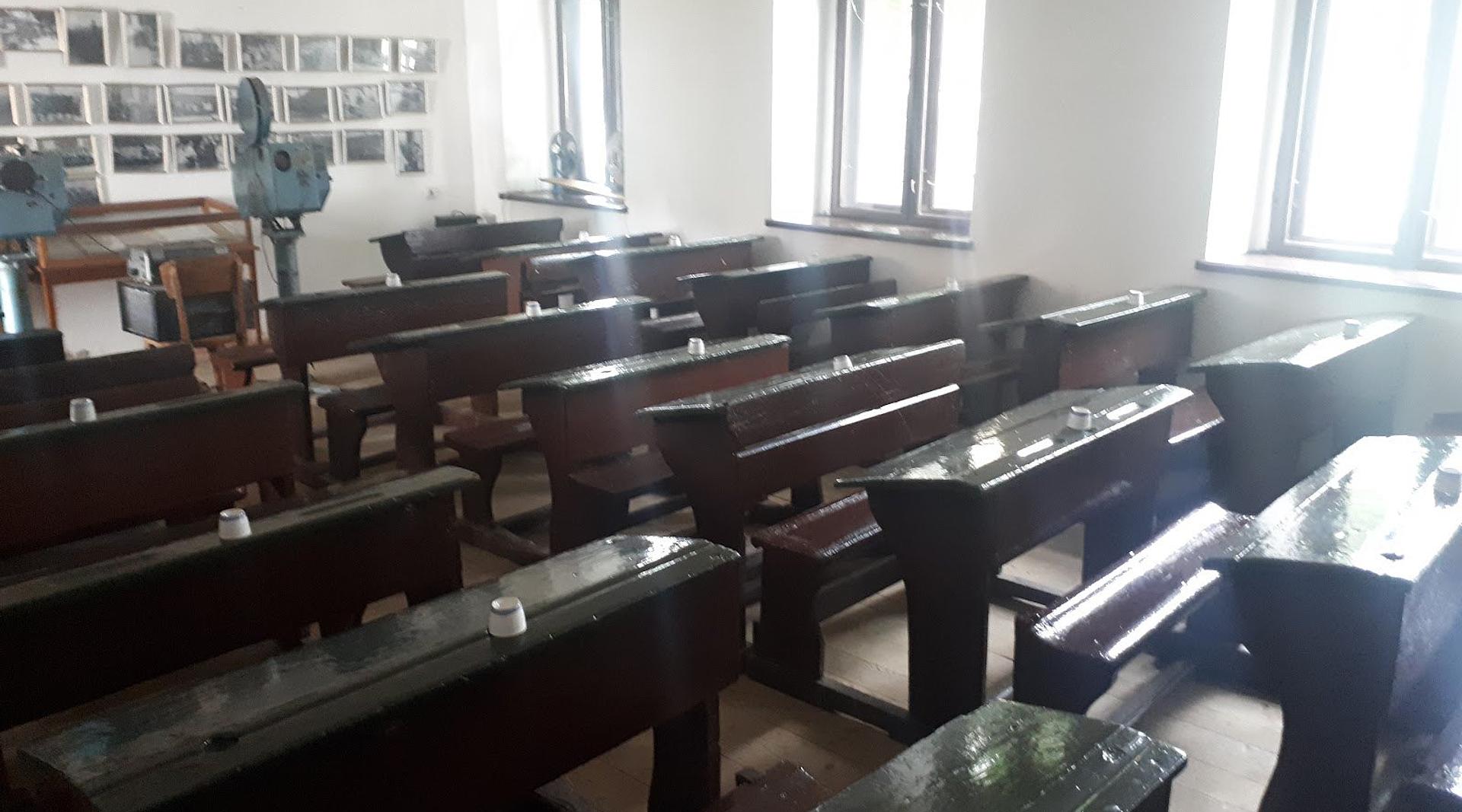
Rows of lift-lid desks face the blackboard. On and around them sit the things a village school ran on: inkwells and dip pens, abacuses for arithmetic, a phonograph, and the iron stove that was the room's only heating. The head teacher's office is fitted out as it stood — telephone, typewriter, radio receiver, filed paperwork. The staff room holds class registers and portraits of the teachers who worked here.
A separate room preserves the fittings of the Pioneer organisation, the Soviet children's movement that nearly every pupil in the country belonged to. The museum presents it the way it presents the stove and the registers: as equipment the school actually used. It makes its case at the level of objects rather than argument, which is the most useful thing it could have done, and it is billed as the first school-museum in Zakarpattia to reconstruct a Soviet-era classroom.
Ask to see the chronicles. The school kept them from the Austro-Hungarian period onward, and they are the one part of the collection that runs continuously through everything the twentieth century did to this village.
Between 1931 and 1938 Kolochava had two Czechoslovak state schools. One taught in the local Rusyn vernacular; the other taught in Czech, and its roll was made up mainly of children from the village's Jewish families, together with the children of officials posted here from Bohemia — the notary, clerks, gendarmes. The room holds maps, textbooks and grade books from those seven years, and a teacher's rest room alongside.
Set against the Soviet classroom a few metres away, the differences read immediately — in the wall maps, in what the books are printed in, in who the registers list. Both rooms taught the same village's children, a generation apart.
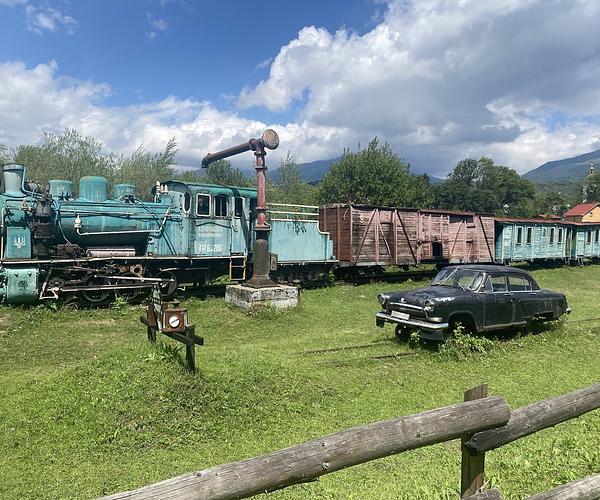
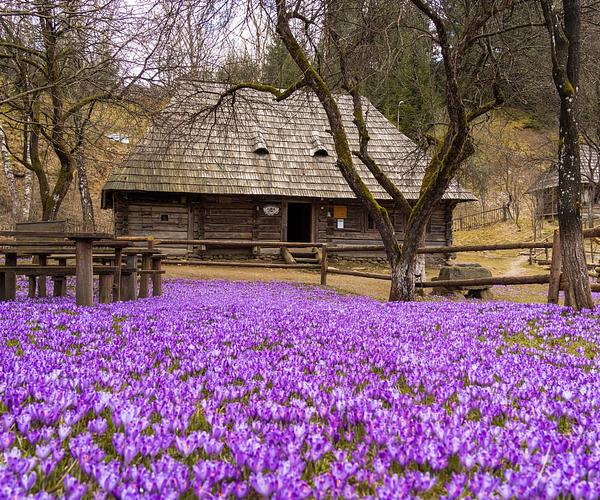
The restoration was paid for in 2006 by Stanislav Arzhevitin, a Kolochava native, banker and former MP, and his reason was a personal one: his parents, Liubov Dmytrivna and Mykhailo Ivanovych, taught in this building for close to thirty years. The Old School became the fourth museum in the project he funded across his home village, the same undertaking behind the Stare Selo skansen and the narrow-gauge railway.
That origin shows in what the museum chose to collect. The portraits in the staff room are of named local teachers rather than of officials, and the registers are the village's own. It is a small building doing something specific: recording who taught here and what they taught with, across every administration that claimed the place.
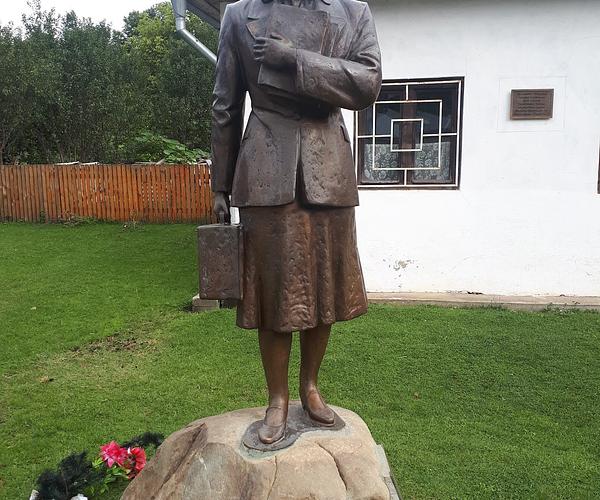
The Old School stands at vul. Tarasa Shevchenka 77, in the historic centre and about half a kilometre from the Stare Selo skansen — a separate stop, not part of it, which catches people out. Both classrooms together take half an hour, so this is the easiest of Kolochava's museums to slot into a day already given over to the skansen and the railway. The Monument to the Teacher stands nearby and belongs to the same walk.
Take a guide if one is free. The rooms are legible on their own, but the registers and chronicles are the best things in the building and they need someone to read them out to you.
Stará sovětská škola je přístupné jako muzeum.