
Віталій Бугаєнко
Музей "Вузькоколійки" являється частиною музею "архітектури та побуту". Цікаві експонати та історія її збереження. Деякі експонати потребують відновлення і виглядають занедбано. Але в цілому цікавий музей.


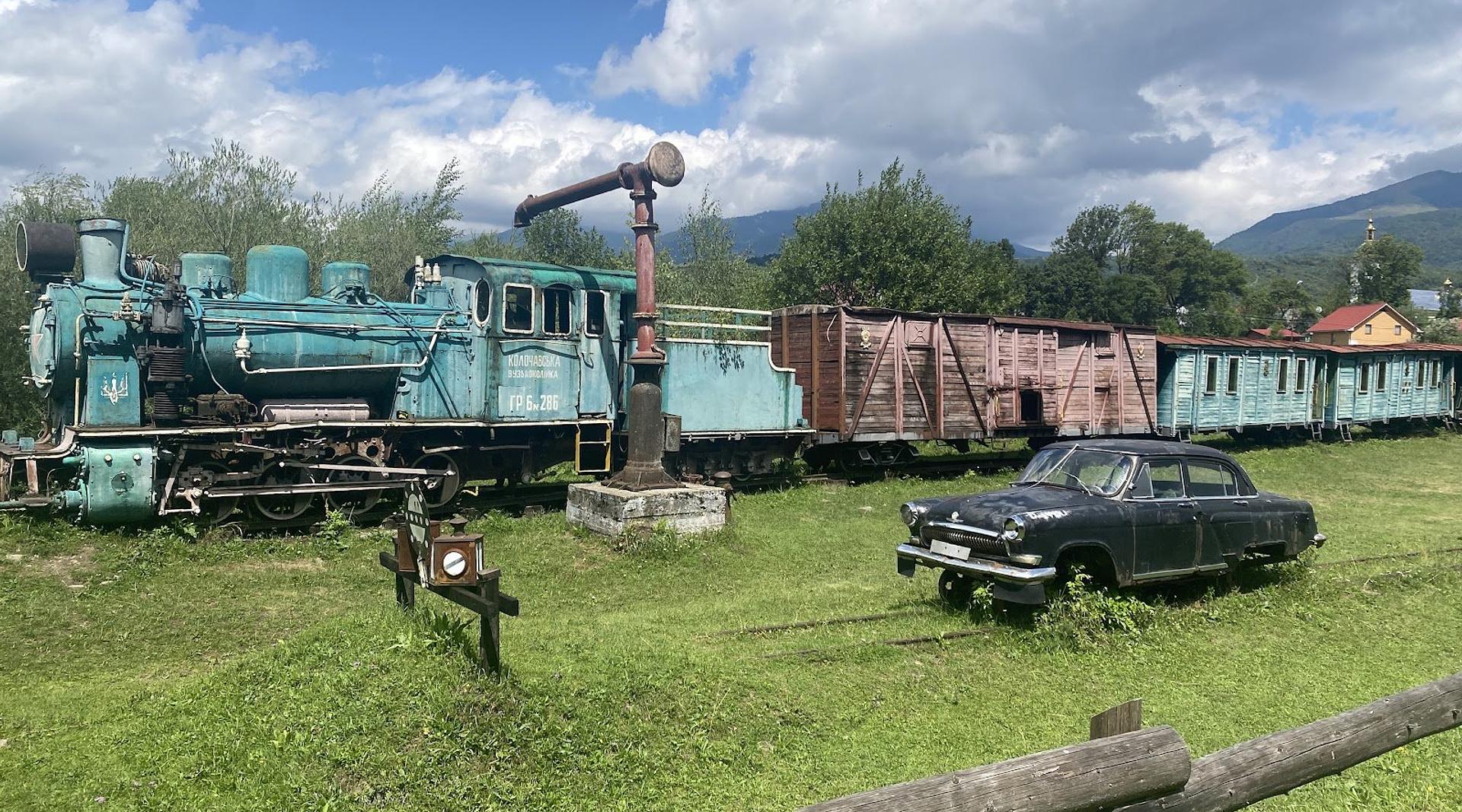
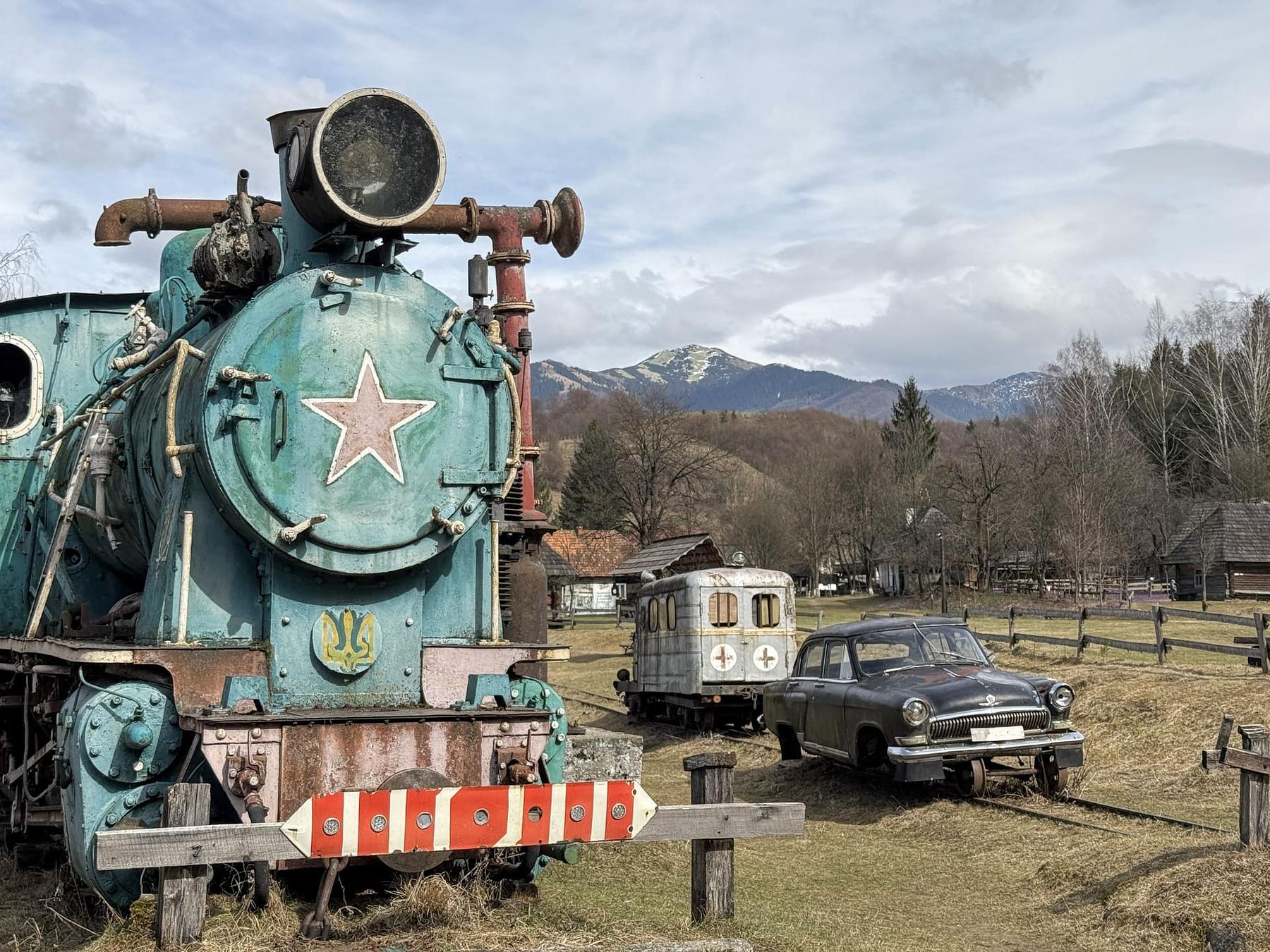
Locomotive Gr-286 left the Karl Marx works at Babelsberg in 1951, hauled loads on Carpathian narrow gauge until 1973, sat out years in a depot at Khmilnyk, ran its last service on the Borzhava line, and in 2008 was bought privately to become the centrepiece of a museum in a mountain village. On holidays it still raises steam and sounds its whistle.
The museum opened on 14 June 2009 inside the Stare Selo skansen and remains the only railway museum in Zakarpattia. What lifts it above an engine on a plinth is that nothing here is a lone survivor: a locomotive, ten wagons, draisines, a station pavilion and a semaphore, arranged as a small working halt rather than a line of exhibits.
Narrow gauge is how these mountains were opened up. From the end of the nineteenth century the lines pushed up the river valleys to the sawmills and the felling grounds, carrying timber, cattle and freight, with passenger services on some routes. Zakarpattia once had a great many of them. Most were lifted during the twentieth century and the stock was abandoned where it stood or cut up for scrap, which is why a collection like this one exists in a village rather than in a city.
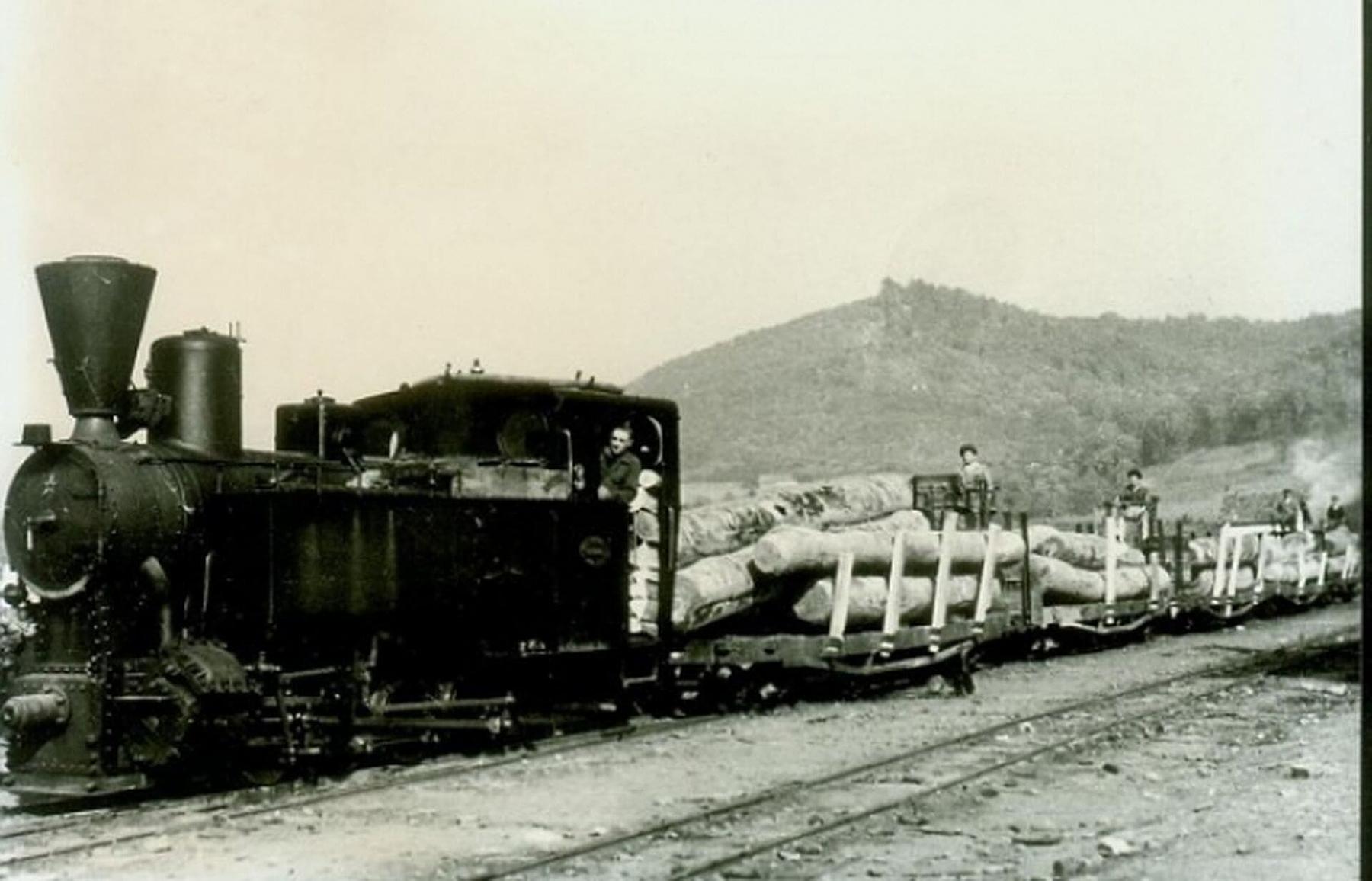
Kolochava's own history is a timber history, and the railway is the part of it that moved. The line and the log-rafting trade were two answers to the same problem — getting felled wood out of a valley with no road worth the name — and the museum reads best if you take it alongside the bokorash exhibit and the woodworking houses in the skansen around it. This is not an isolated transport museum. It is the mechanical half of how people here made a living.
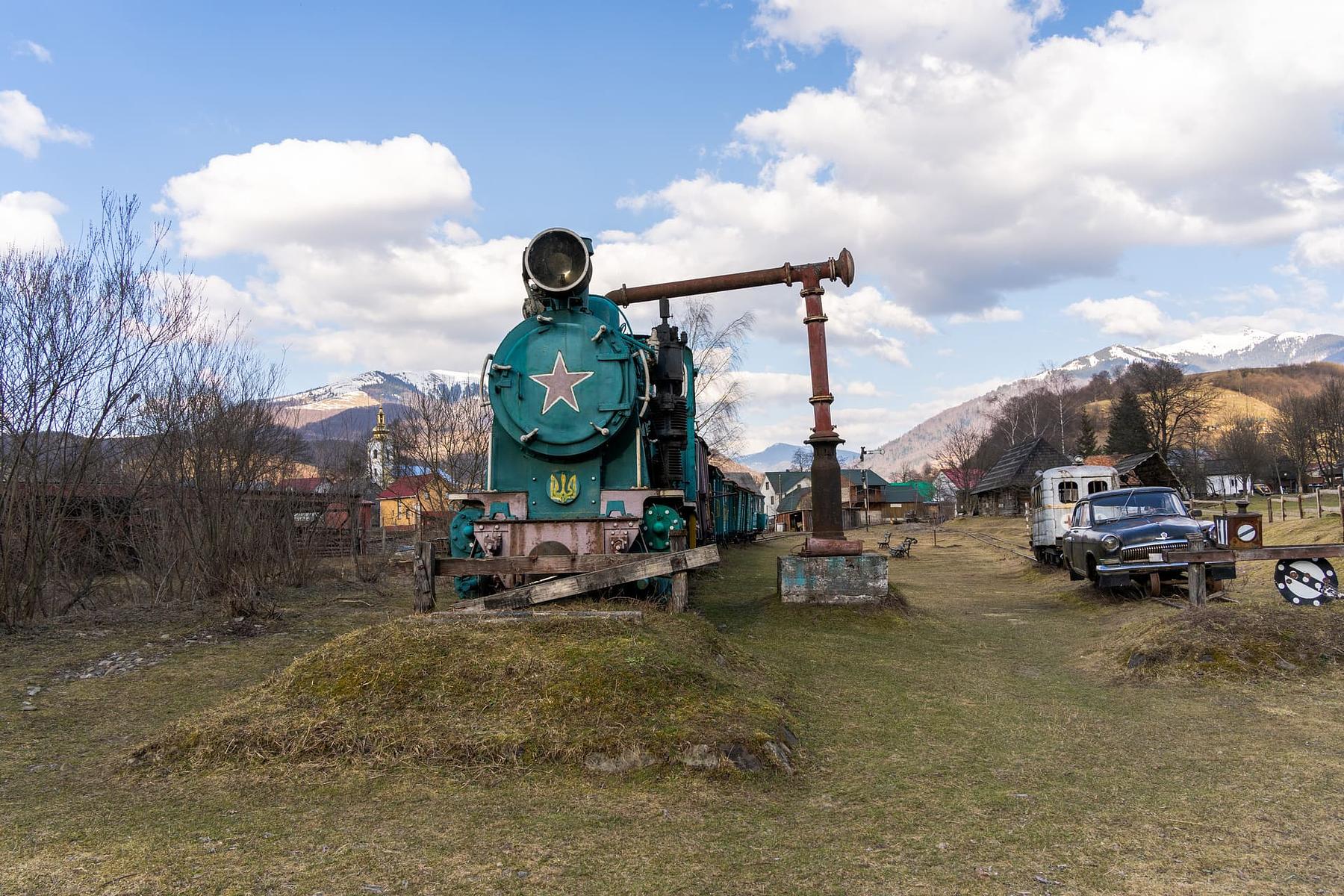
The locomotive is the reason most people stop, and it is a rare machine to see this close in Ukraine — a German-built engine of 1951, restored after a long retirement and kept in working order rather than painted and left. Bringing it to Kolochava and getting it running again took considerable time and money. Children tend to go straight for it; so, fairly often, do the adults who came in saying they had no interest in trains.
The wagons have a harder story than the engine. They came from Lopukhiv, in Tiachiv district, where the 1998 flood destroyed the local narrow-gauge line outright. They then lay out in water and mud for a decade before anyone moved them. In 2008 they were hauled to Kolochava and rebuilt on site by museum staff, and that work — on rusted, buckled bodies — is the reason there is anything here at all.
The idea and the money came from Stanislav Arzhevitin, the Kolochava native behind the village's museums, who worked with railway staff to track down whatever stock still survived across the region. In December 2009, six months after opening, the museum took third place for exhibition design at the national competition for public museums.
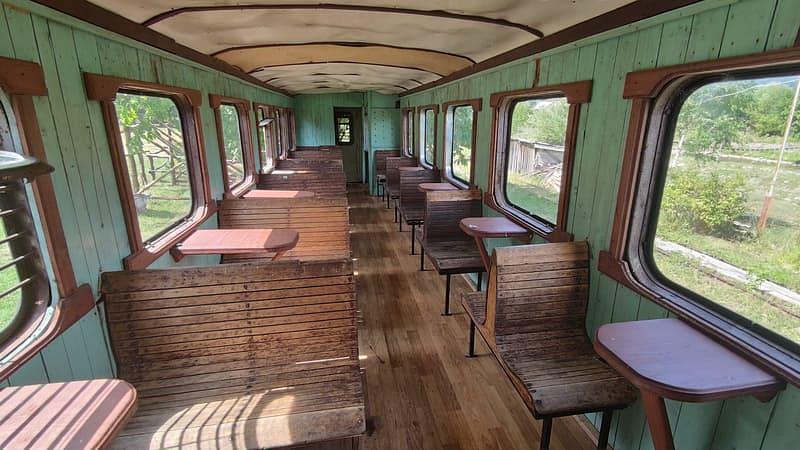
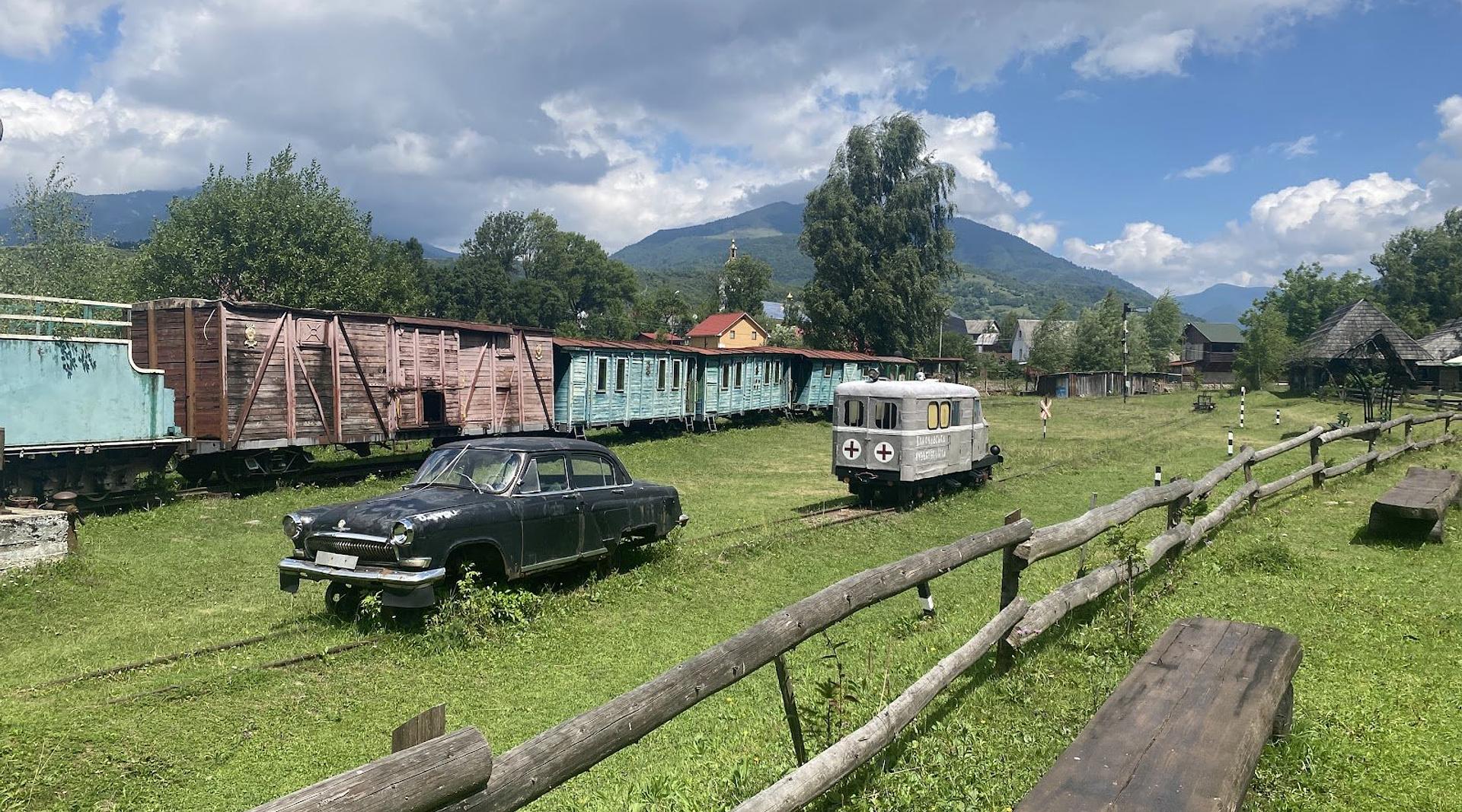
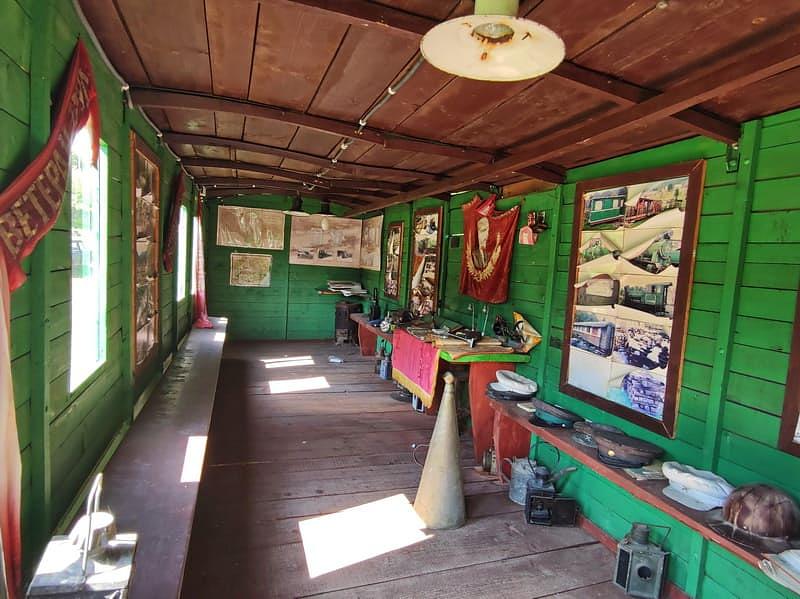
The rake covers several eras rather than one. There are Czechoslovak-period passenger carriages, plain wooden benches and restrained fittings, which say as much about the interwar years in Zakarpattia as any document does; a Soviet-built goods van; Hungarian cattle wagons; flats for timber; a water tank. Several wagons have been fitted out inside with tools, maps, railway equipment, lamps, documents and photographs, so you climb in rather than peer through glass.
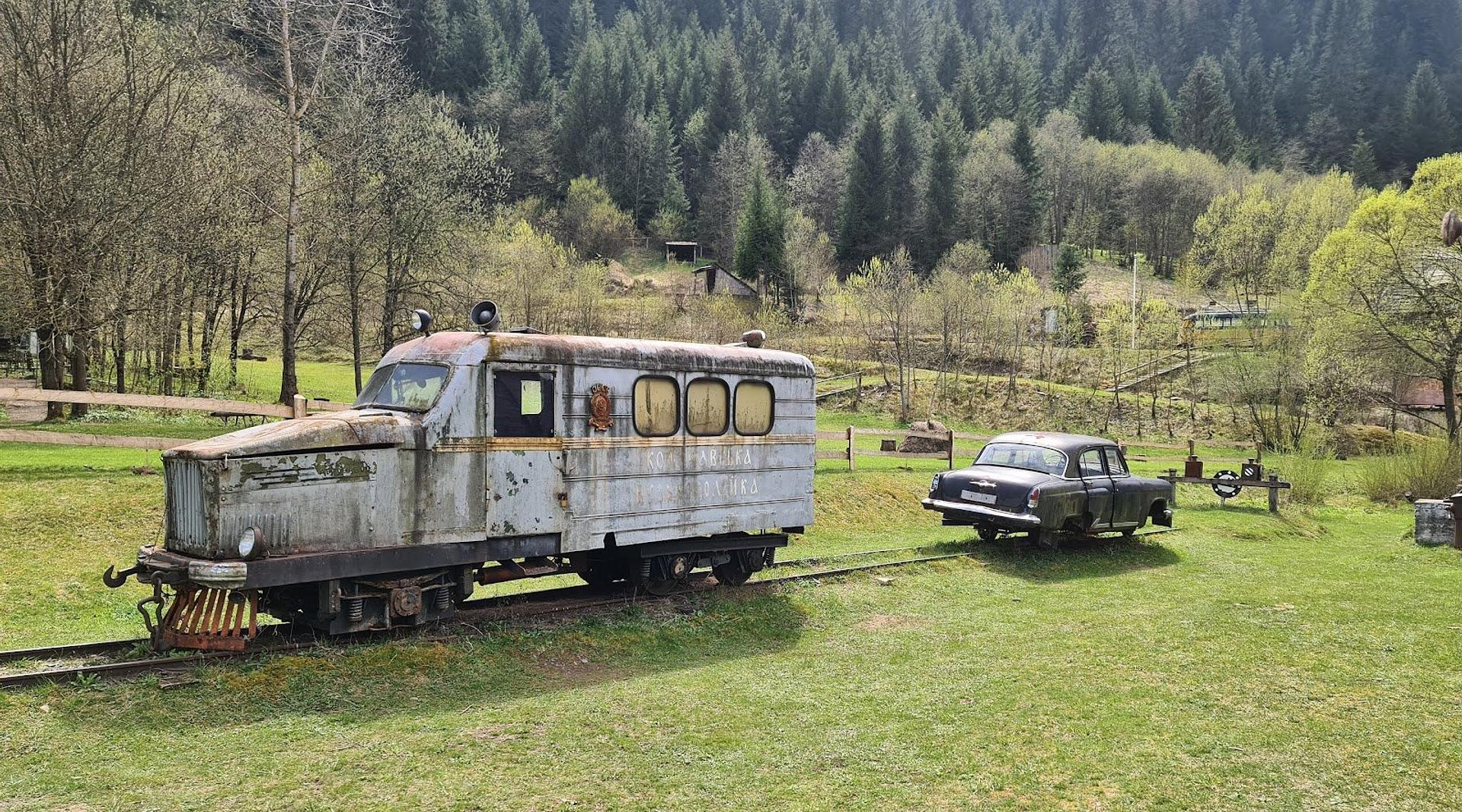
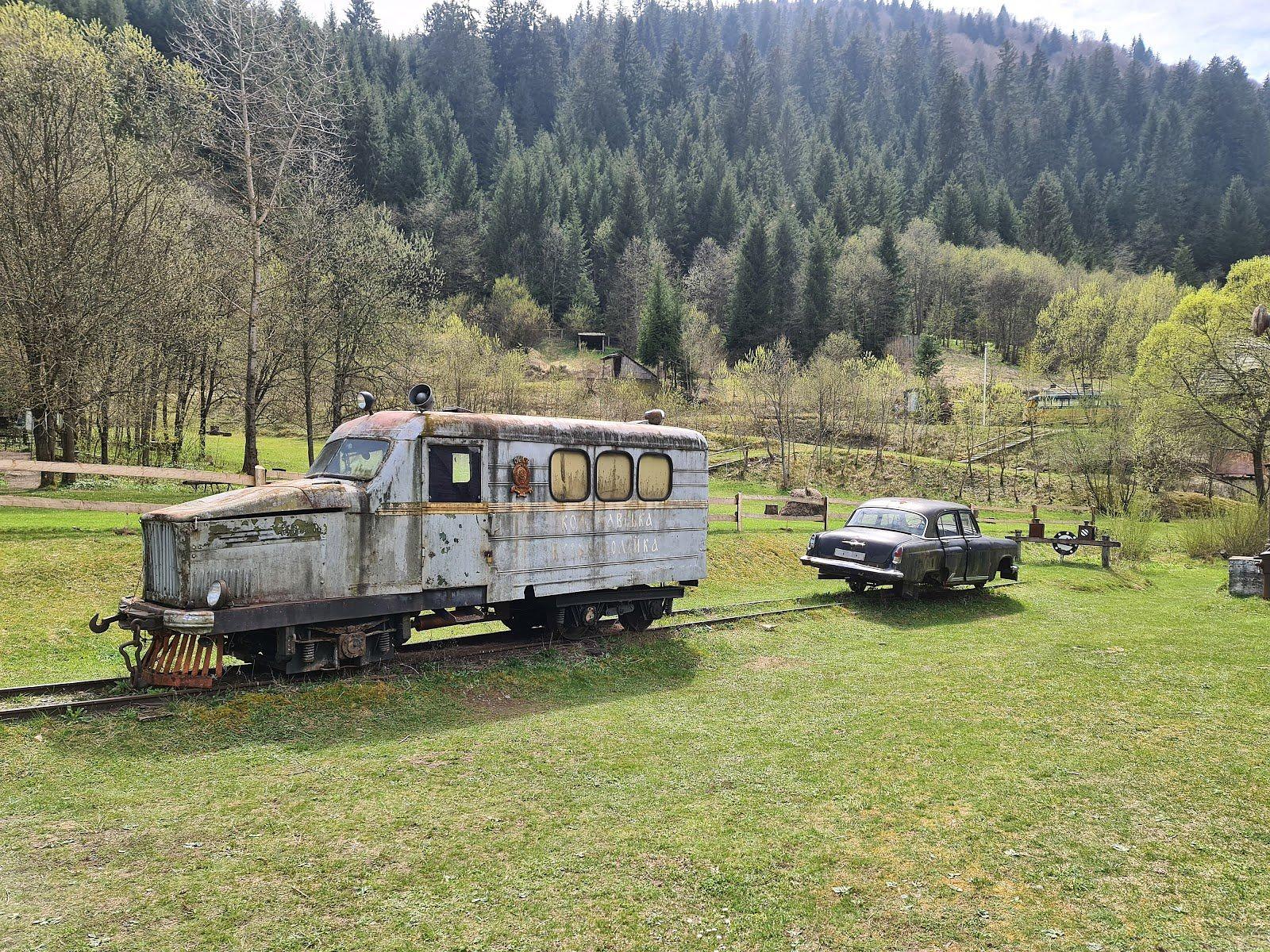
Draisines are the surprise of the visit. There are several, including a medical motor draisine and — the one everybody photographs — a Volga saloon car converted to run on rails. You can ride one, sound the locomotive's whistle and take a turn as stoker, which puts this museum in a small category: places where the exhibits move and you are allowed to touch them. Travelling with children, budget more time here than you think you need.
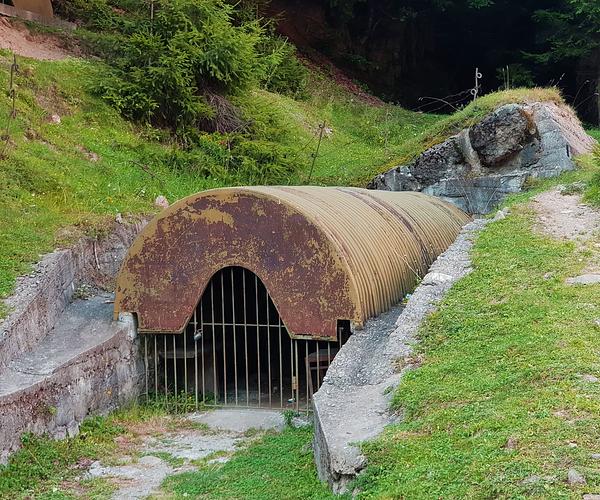
The railway sits on the grounds of the Stare Selo skansen and is signposted as one of its expositions, so look for it there rather than as a separate address. An hour covers the trains alone; skansen and railway together want half a day, and Kolochava as a whole — the school museums, the Arpad Line bunker, the Church of the Holy Spirit — fills one comfortably.
Come on a holiday and the engine will be in steam. The rest of the year it is static, which takes nothing away from the wagons; the difference is a noise and a smell, and both are worth timing a visit for.
Музей "Вузькоколійки" являється частиною музею "архітектури та побуту". Цікаві експонати та історія її збереження. Деякі експонати потребують відновлення і виглядають занедбано. Але в цілому цікавий музей.

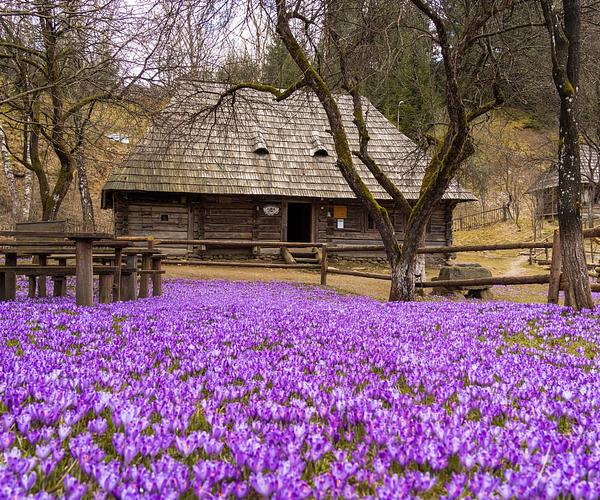
Дуже чудовий музей вузькоколійки і не тільки. Автентичні будівлі 19-го сторіччя. Експонати в кожному будинку, також в кількох залізничних вагонах. Будинки різного історичного значення. Навіть літній шкільний клас з партами на подвір'ї. Навколо мальовничі гори Закарпаття. Чисто, прибрано, охайно доглянута територія. Є інша техніка окрім вузькоколійного складу з паровозу і вагонів. Дрезина, мотодрезина, авто та мотоцикли. На мотодрезині можна покататися за гроші 1 годину. Є на території туалет загального користування. На вході каса з привітним і ввічливим касиром. Можна прийти з дітьми. Також тут знаходиться на території кафе та кав'ярня.

Дуже цікавий, охайний та привітний музей під небом))) Якщо будете десь поруч - обов'язково завітайте. Мотодрезина - то просто чудо чудесне - дітям дууууже сподобалося. Порада: не їдьте з Колочави на Хуст по прямій - краще через Міжгір'я )))