Lviv
Map: Lviv
Where to go in Lviv


Where to stay in Lviv


Where to eat in Lviv


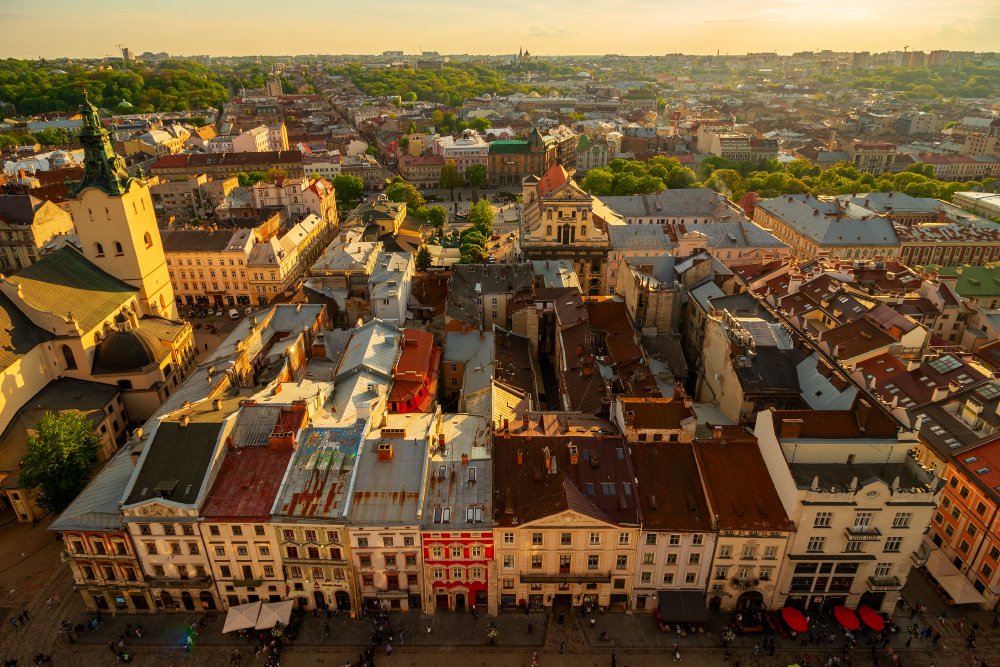
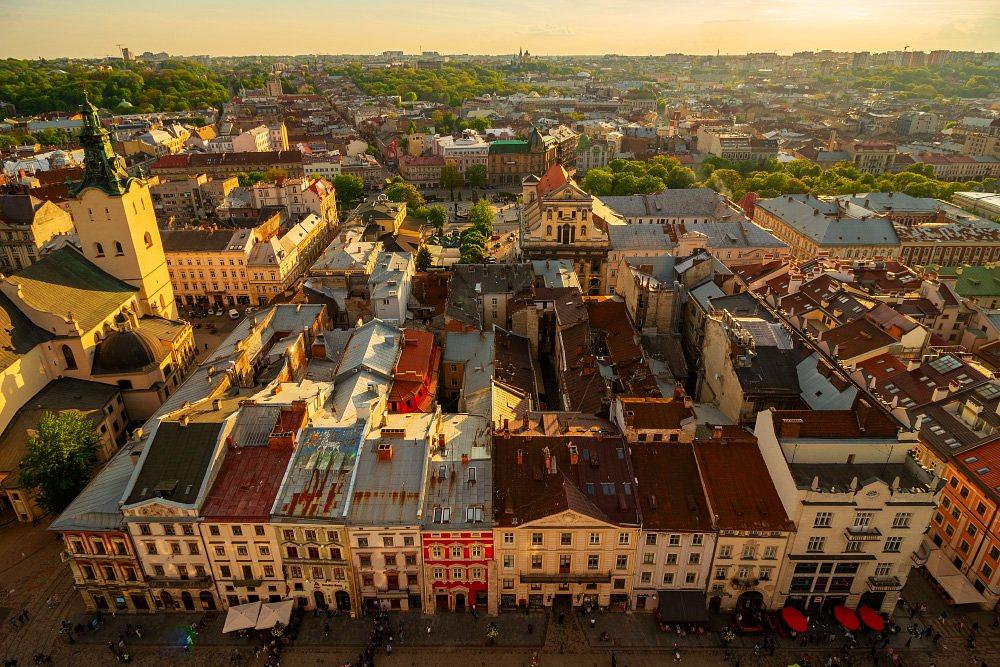
Forty-four houses stand on Ploshcha Rynok and every one is a listed monument, put up between the 16th and the 20th centuries by architects from Lombardy, southern Switzerland and Austria for merchants who made their money in wine, cloth and fur. The square has never been rebuilt because it never had to be: the old town came through the Second World War with its street plan and most of its buildings standing, which is why UNESCO inscribed the centre in 1998 and why Lviv looks like nowhere else in the country.
It is a small city to walk. The medieval core is barely a kilometre across, the Polish border is 70 km west, and the cobbles will have found out your shoes by lunchtime on the first day.
The square, the tower and the 408 steps
Start on Rynok and look up. No 4 is the Black House, late 16th century, white limestone gone black with soot and later painted to keep it that way. On the east side the Kornyakt Palace, built in 1580 for a Greek wine and cloth trader, hides the Italian Courtyard: a three-tier Renaissance loggia the city fills with concerts all summer.
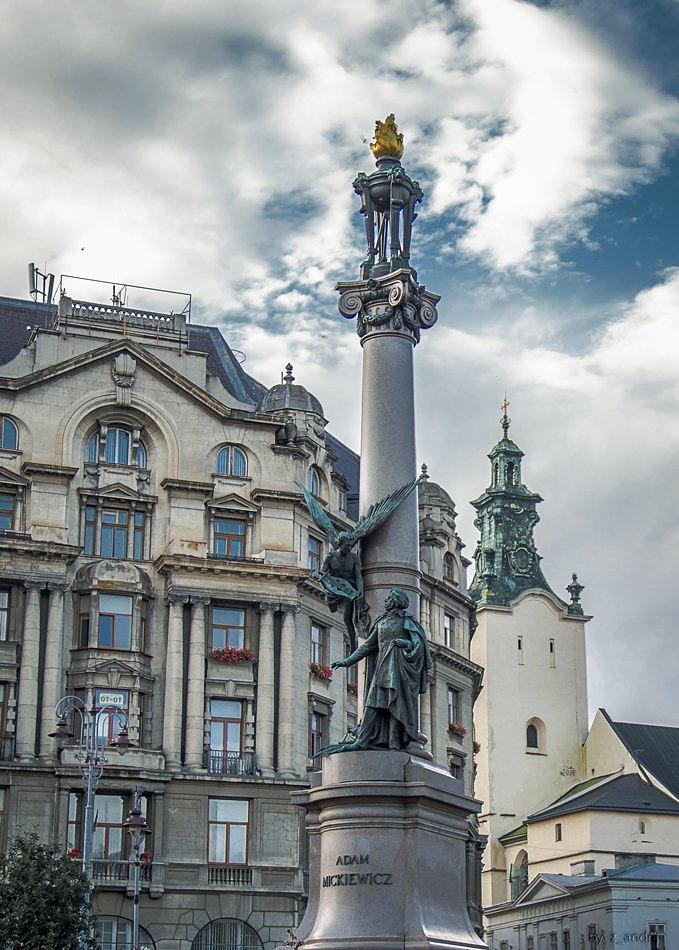
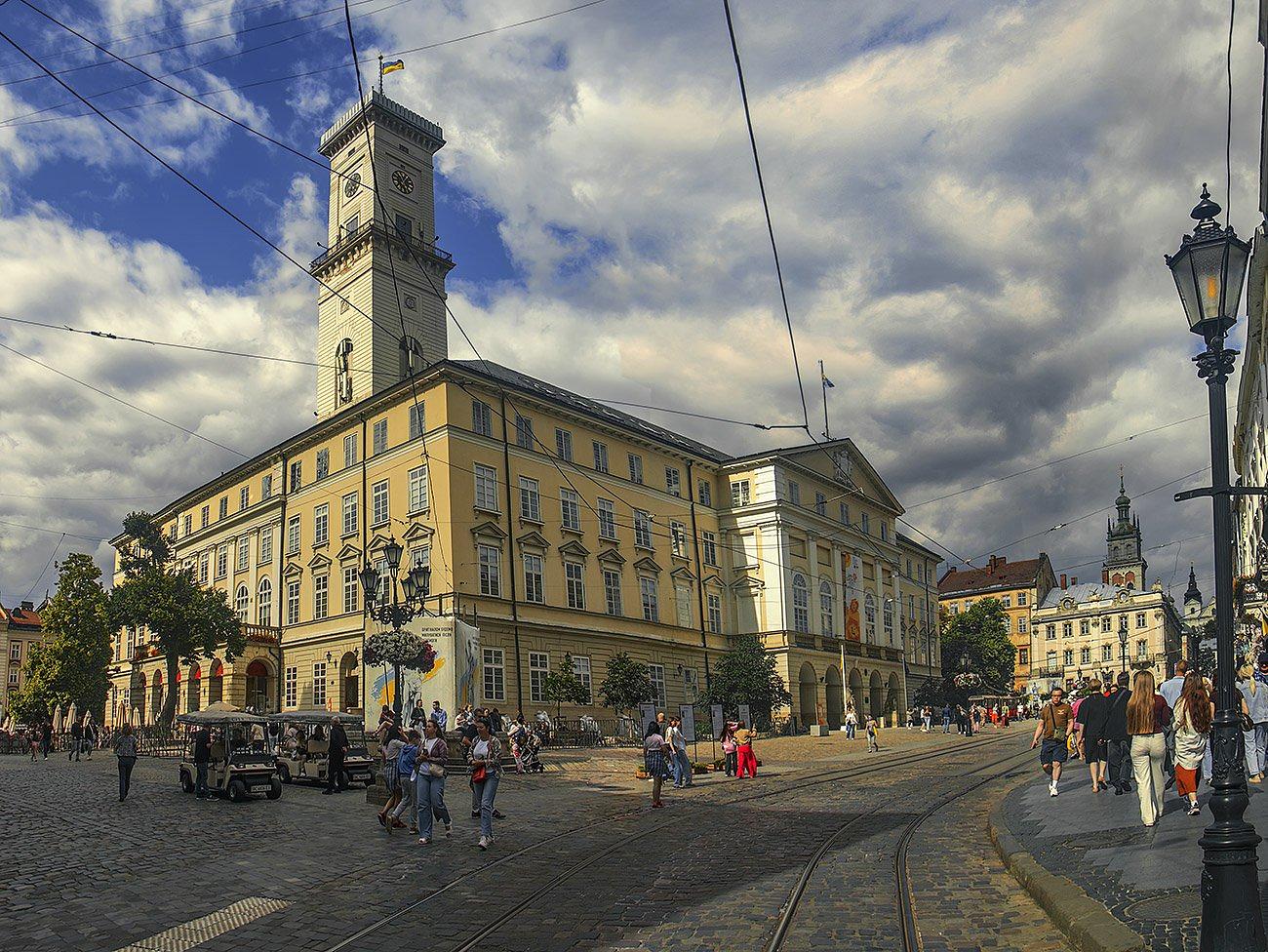
The Town Hall sits in the middle of the square and the tower is 408 steps up. The clock at the top was made in 1852 at Wilhelm Stiehl's works outside Vienna and still runs on falling weights; if the bells go while you are on the gallery, you will hear about it all afternoon. The Mickiewicz column below is where Lviv arranges to meet.
Quarters worth losing an afternoon in
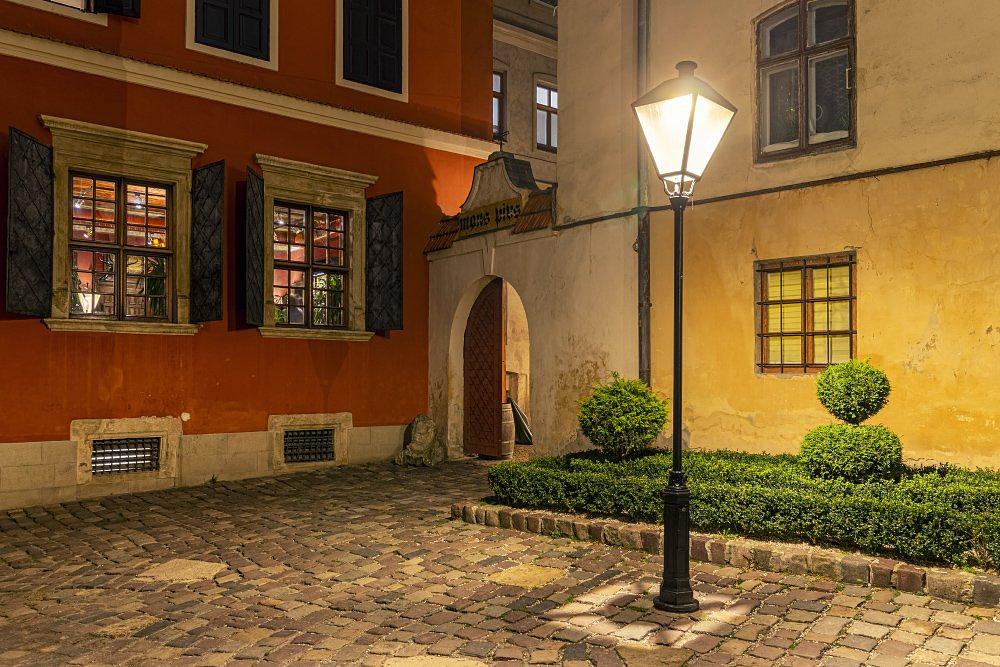
Vul. Virmenska is the Armenian quarter and the best street in the city. The 14th-century cathedral at its centre holds Jan Henryk Rosen's murals, where a funeral procession of hooded figures softens nothing for the viewer. The courtyard outside stays cool and half-empty even in August.
West of Rynok, vul. Staroyevreiska runs through the old Jewish quarter; the Golden Rose synagogue was destroyed under German occupation and its footprint is a memorial now. For Lviv without the render and the flower boxes, walk north into Pidzamche — rail sheds, blackened brick, washing on balconies. Not pretty, and not pretending to be.
Above the roofs, and the ground below them
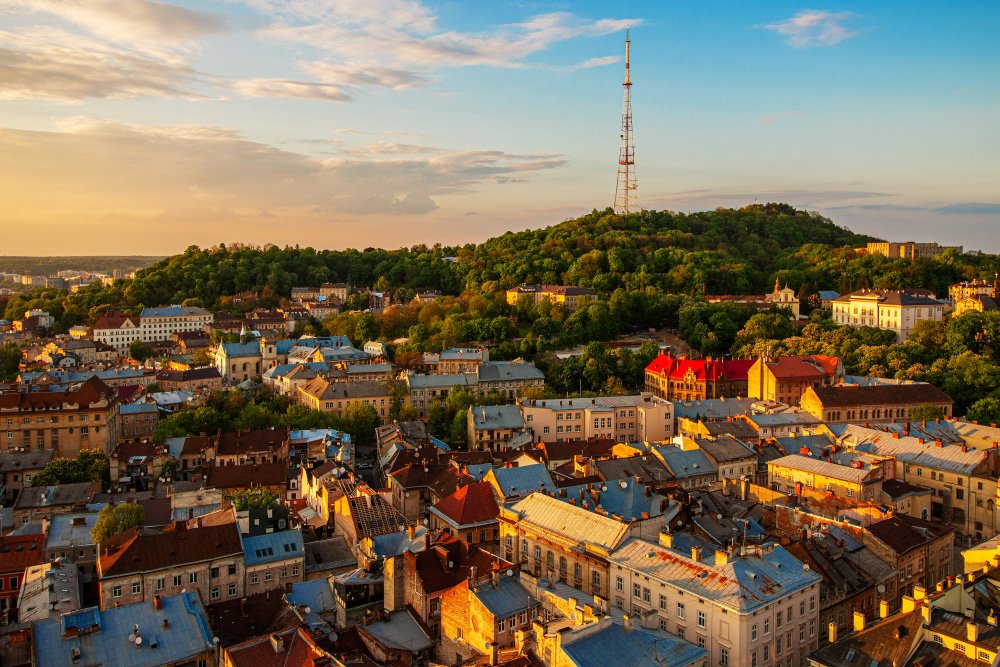
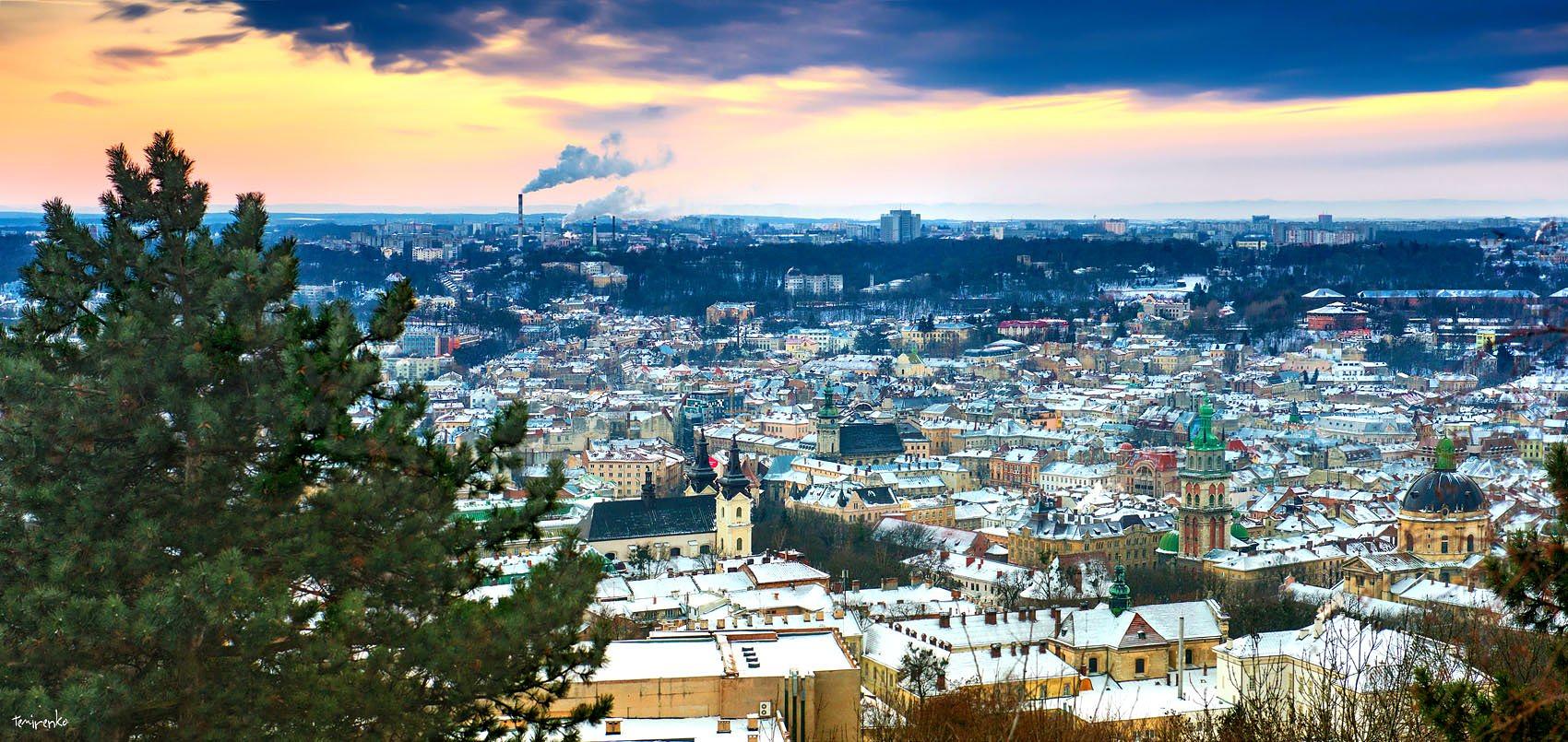
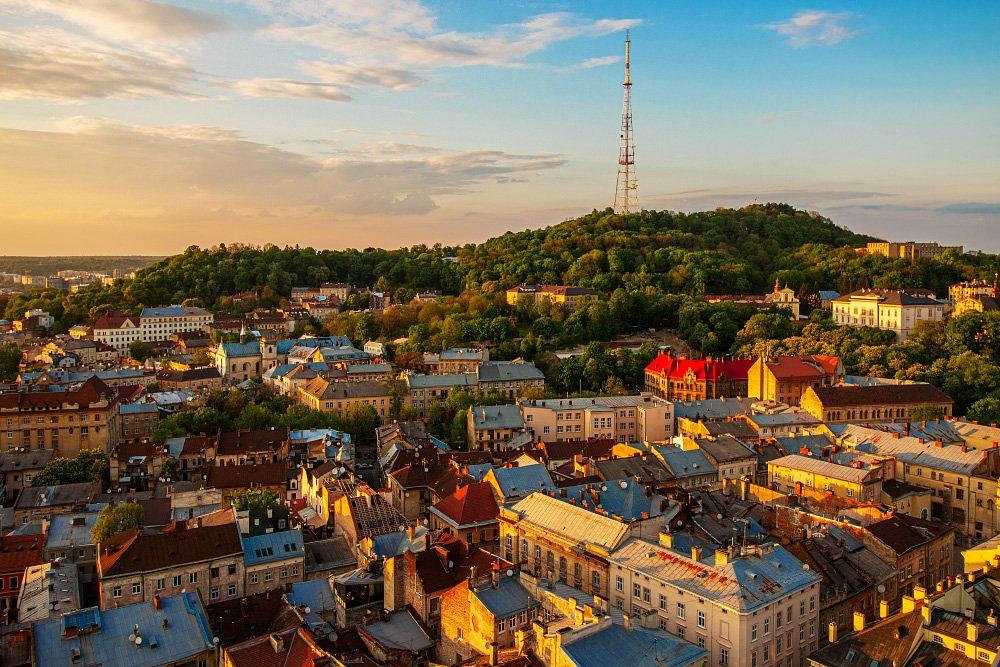
The High Castle hill is the city's high point at 413 m, most of that summit piled up by hand from 1869 to mark the Union of Lublin. The top of the mound is closed under martial law; the park and lower platform stay open. Next door, Lion Mountain has fewer railings, more wind and better sunsets — bring a flask and don't plan on conversation.
Southeast of the centre, Lychakiv Cemetery covers a wooded hillside of 19th-century tombs and chapels, Ivan Franko among them. Its Field of Mars is where Lviv buries the soldiers of this war. By late 2025 it had nineteen plots left, and the city was opening a new section on the former Hill of Glory. Go quietly, and leave the camera in the bag.
Courtyards, coffee and the queue problem
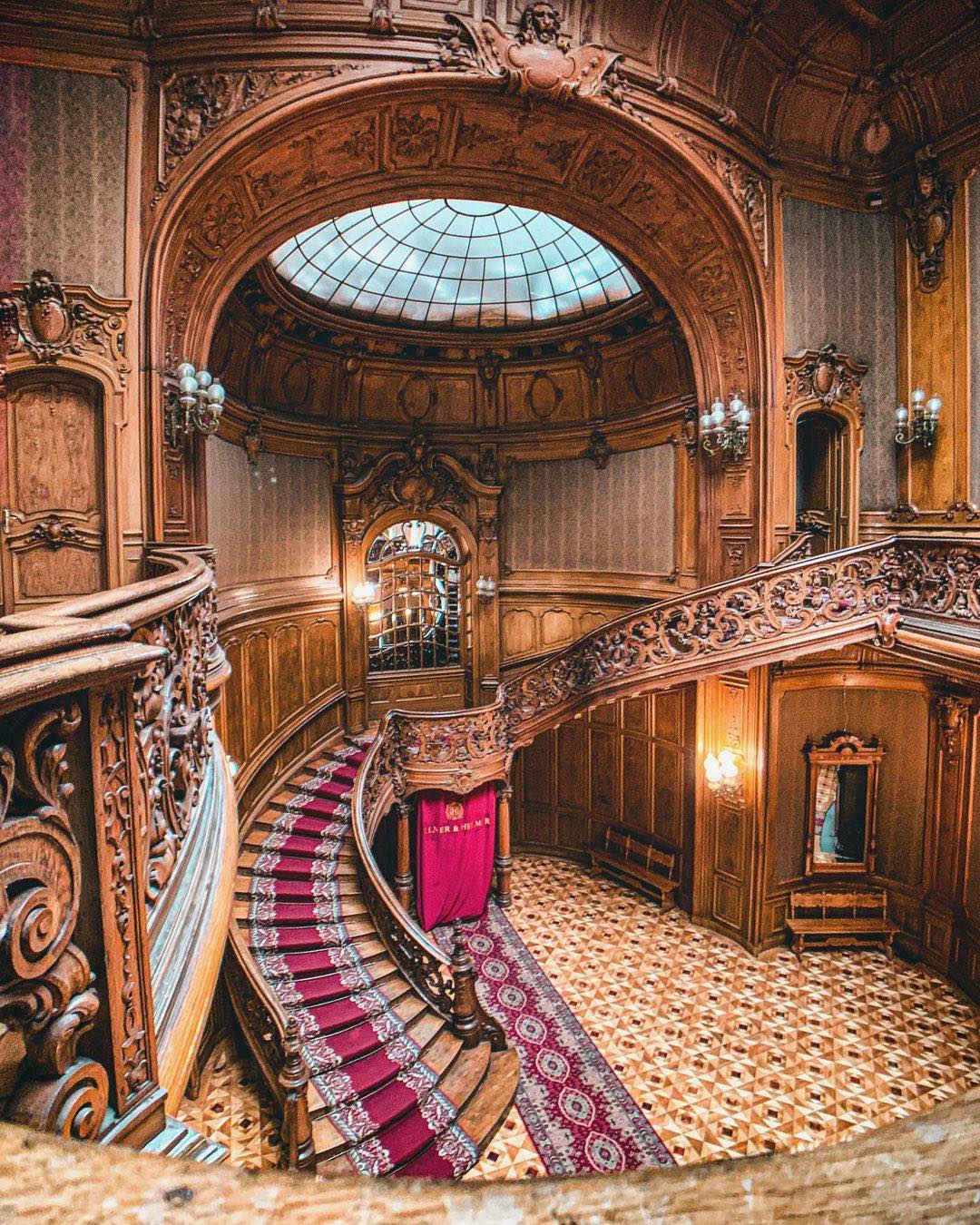
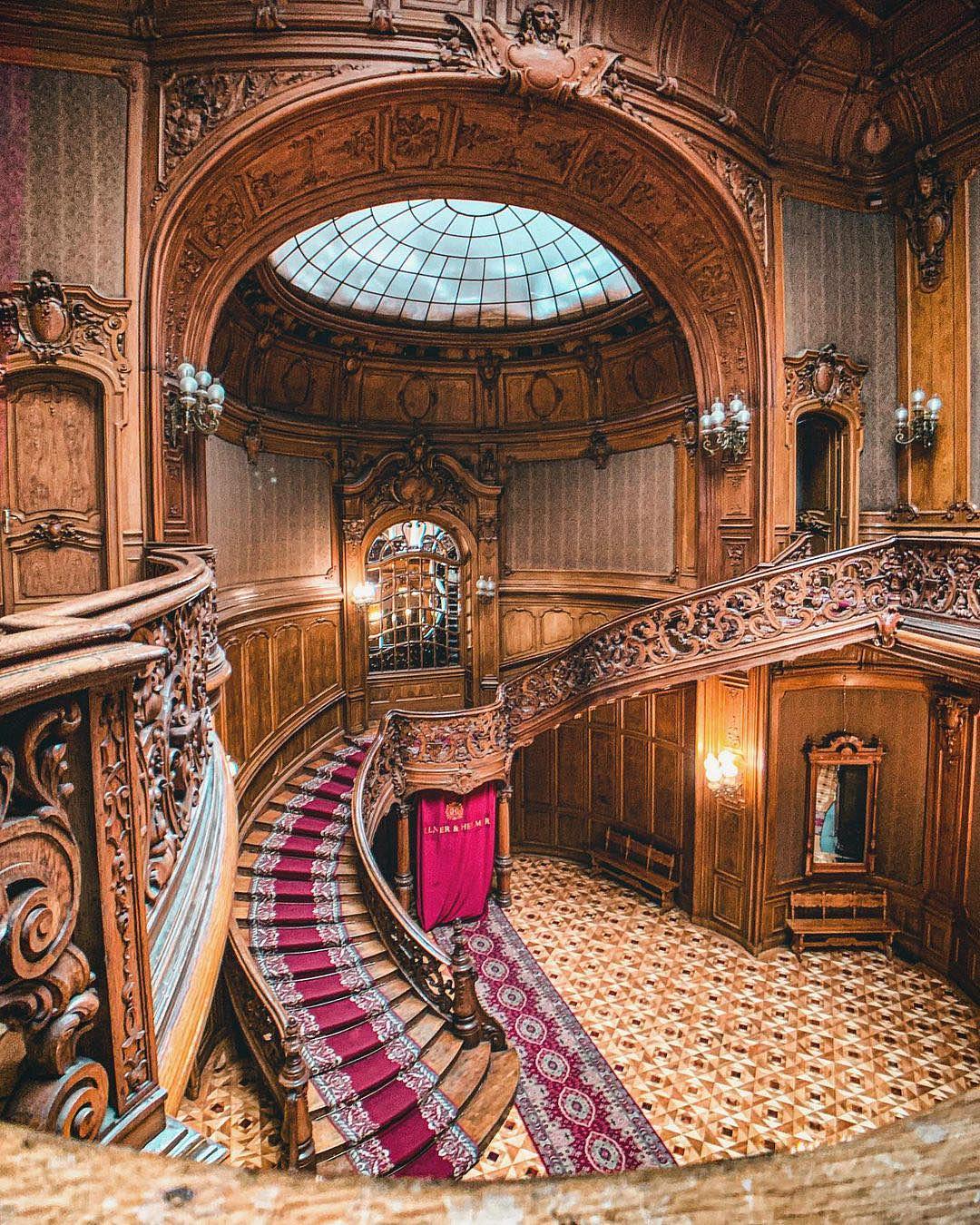
The House of Scientists on vul. Lystopadovoho Chynu was a nobles' casino first, and its oak staircase has been filmed more than most Ukrainian actors; it takes private bookings, so check the schedule; go around eleven, when the light drops through the glass ceiling. The Courtyard of Lost Toys on vul. Kniazia Leva began with one resident collecting what others threw away; strange, and not for every temperament.
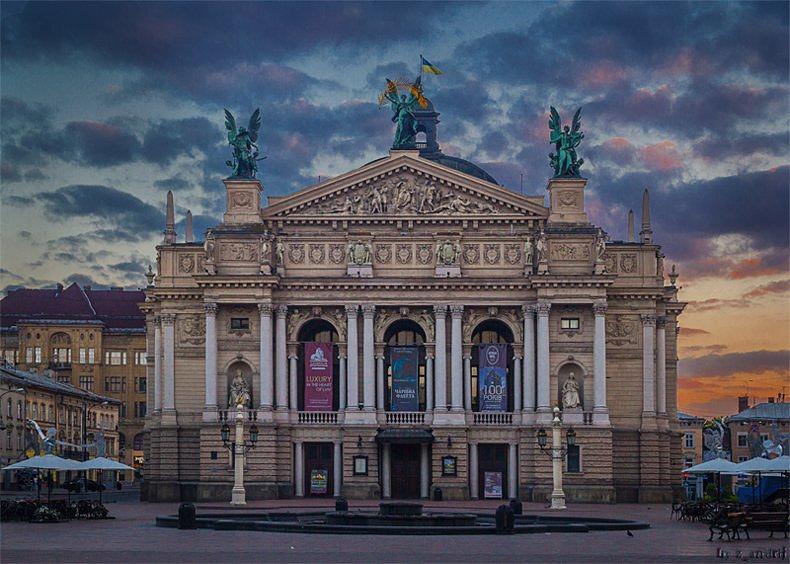
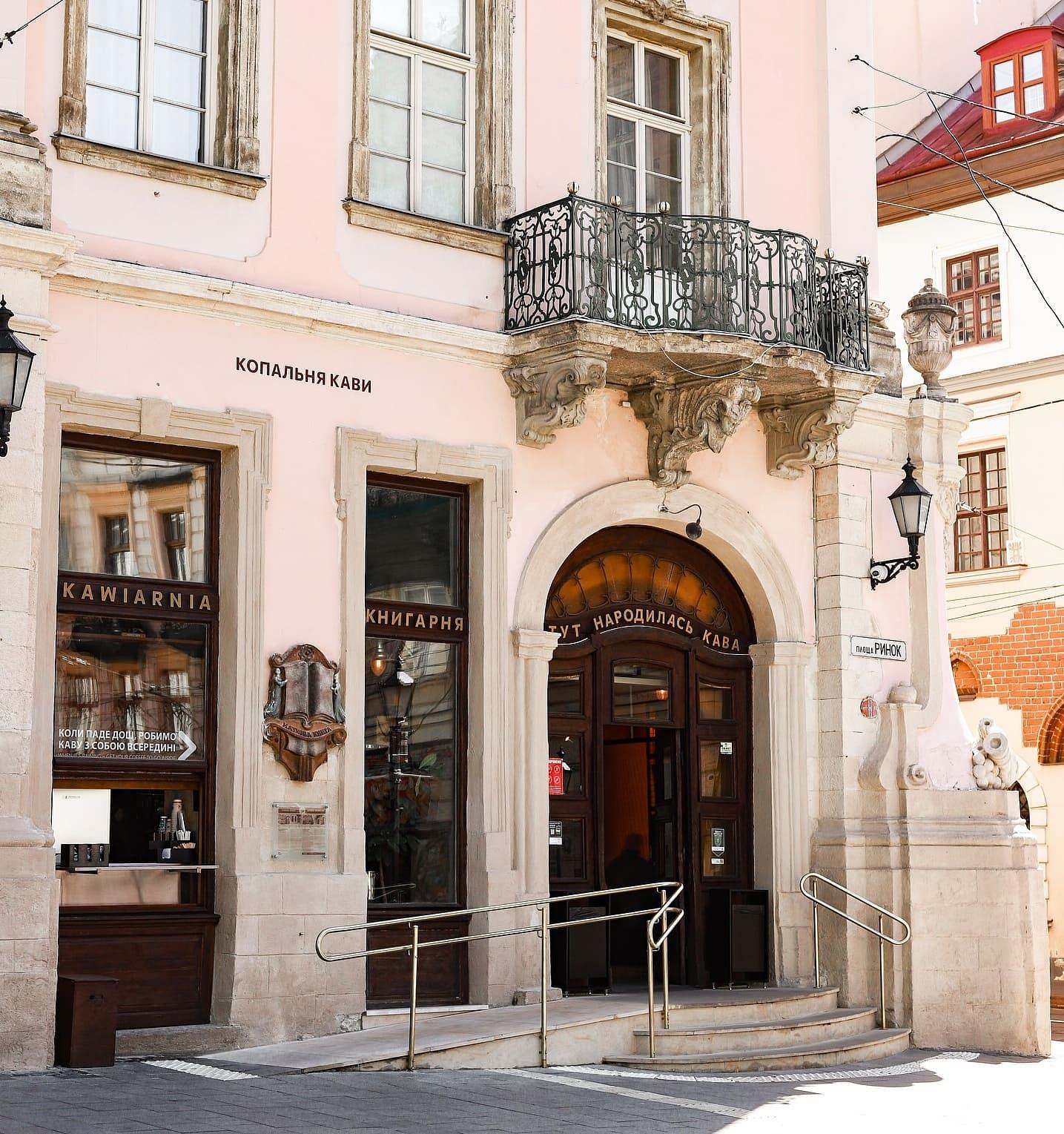
Coffee comes with rules. The Coffee Mining Manufacture works the mine conceit hard — helmets, cellars, a sealed coffee caramelised at your table with a blowtorch — while Svit Kavy by the Latin Cathedral does the opposite, well. Kryivka and Pyana Vyshnia at eight on a Saturday cost an hour in the queue: go at lunch, or midweek, or take a bottle of cherry liqueur to a bench by the Opera. The best syrnyk is never where the sign is biggest.
Parks, children and the shape of a weekend
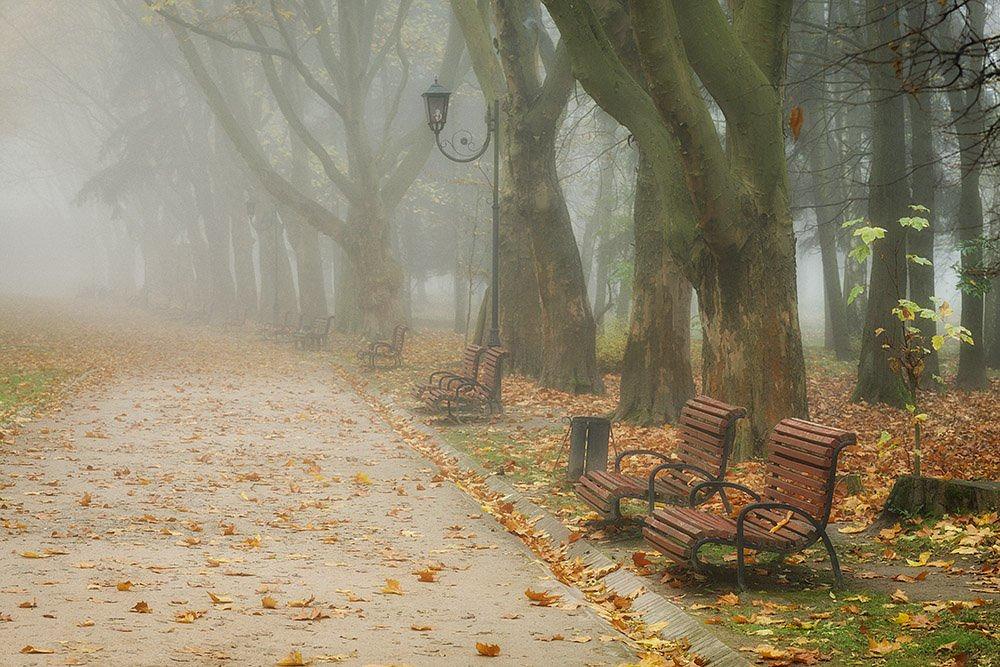
Stryiskyi Park was laid out from 1876 to Arnold Röhring's plan: 50-odd hectares, 40,000 trees, a palm house, a pond of self-important swans and a monument to the first football match played in Ukraine. No music, no rides. That is the point of it.
For children: the oceanarium on prospekt Shevchenka, the natural history museum with its mammoth and woolly rhinoceros dug out of the Subcarpathians, and the chocolate workshop, where you watch the stuff move behind glass or make your own. Give a weekend one day for the centre and one for the edges — Shevchenkivskyi Hai, the open-air museum of wooden village architecture, is the better use of the second.

Getting here, and what the war means for Lviv
You arrive overland. Trains from Przemyśl take about two hours including passport control, which makes Lviv the first large Ukrainian city past the border; from Kyiv they run roughly hourly under the December 2025 timetable, fastest just under six hours. Curfew is midnight to 05:00, shelters are signposted, and the local drizzle arrives from all directions at once, so bring a coat.
Distance from the front line is not the same as safety. On 24–25 March 2026 a daytime drone attack started fires in the UNESCO-listed centre, around the Bernardine monastery complex, and out in Sykhiv; on 30 July 2026 cruise missiles hit two residential towers, killing one person and injuring more than thirty, children among them. Lviv has also taken in over 150,000 displaced people and become the country's rehabilitation hub — the UNBROKEN campus has treated more than 27,000 wounded. That is the city you are visiting: largely intact, hospitable, and carrying much of the war's aftercare.