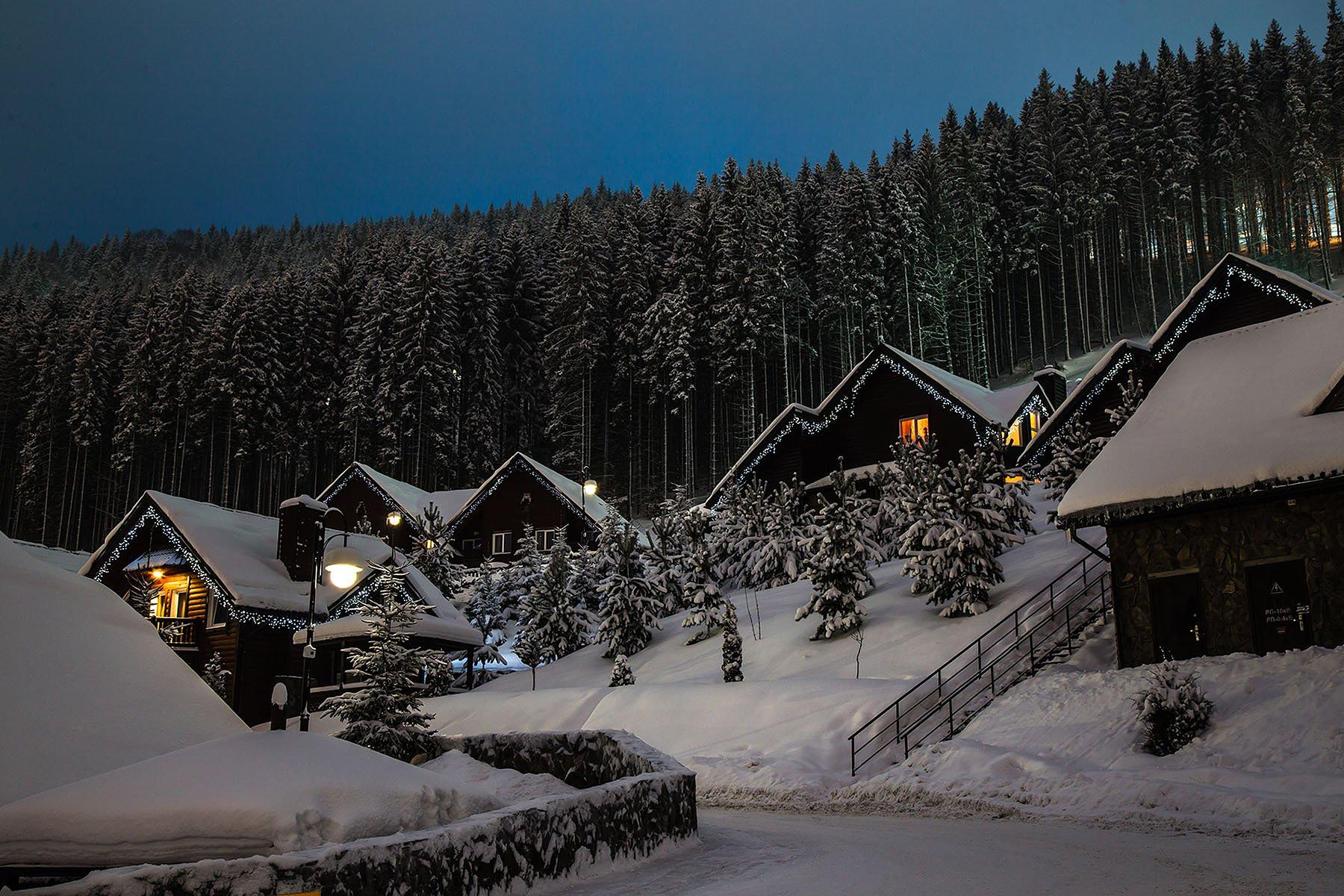
Bukovel's highest lift tops out at 1,372m on Mt Dovha, which by Alpine standards is barely a ski mountain. The resort works because it manufactures its own winter: every run is wired for snowmaking, groomers go out nightly, and the season holds from early December into April more or less regardless of what the sky does. That reliability is the business model, and it explains how a place that did not exist in 2000 became the largest ski area in Ukraine.
It is also the loudest, priciest and most heavily built corner of the Carpathians. Come knowing that.
Photo by ДЮСШ «Буковель»
The skiing
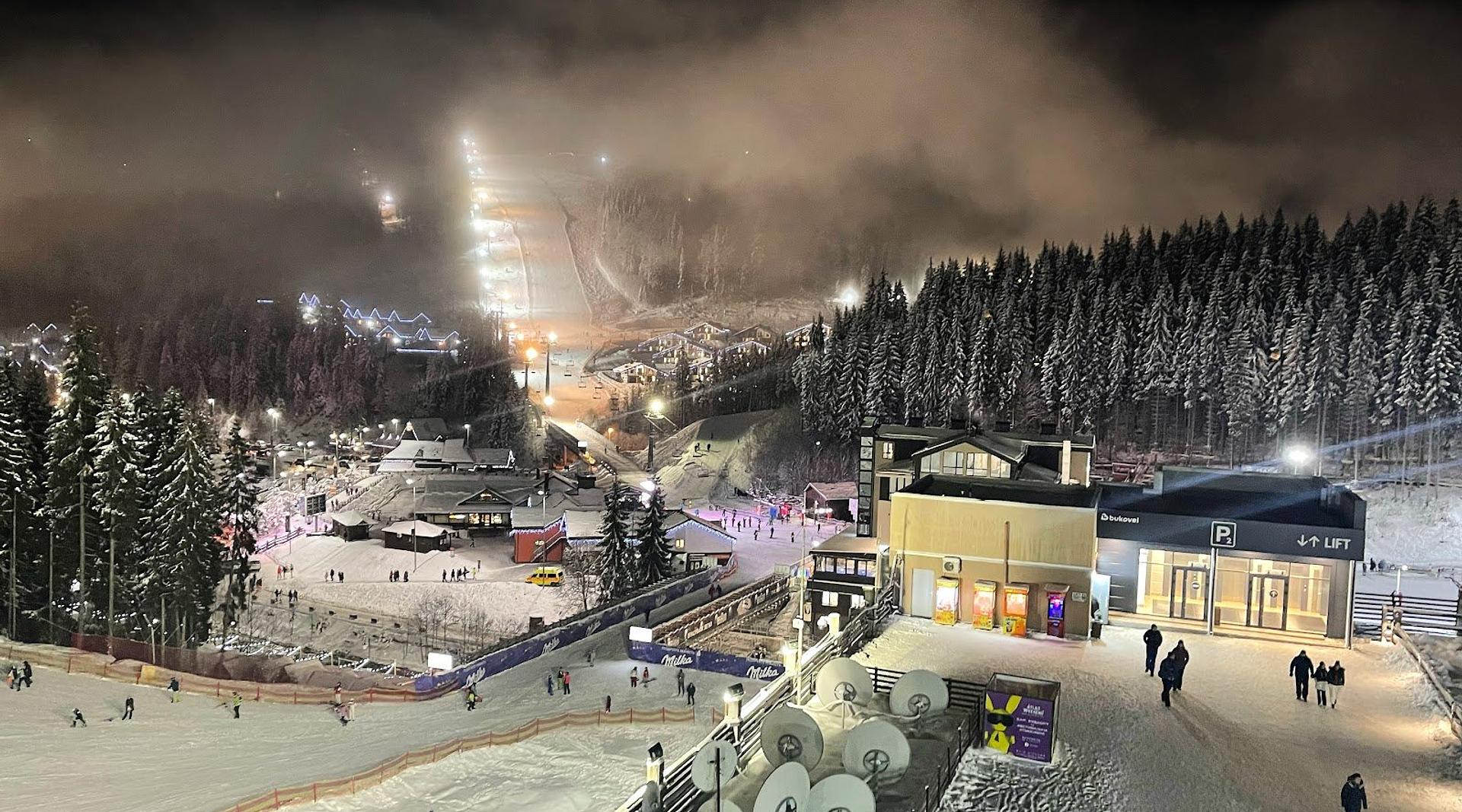
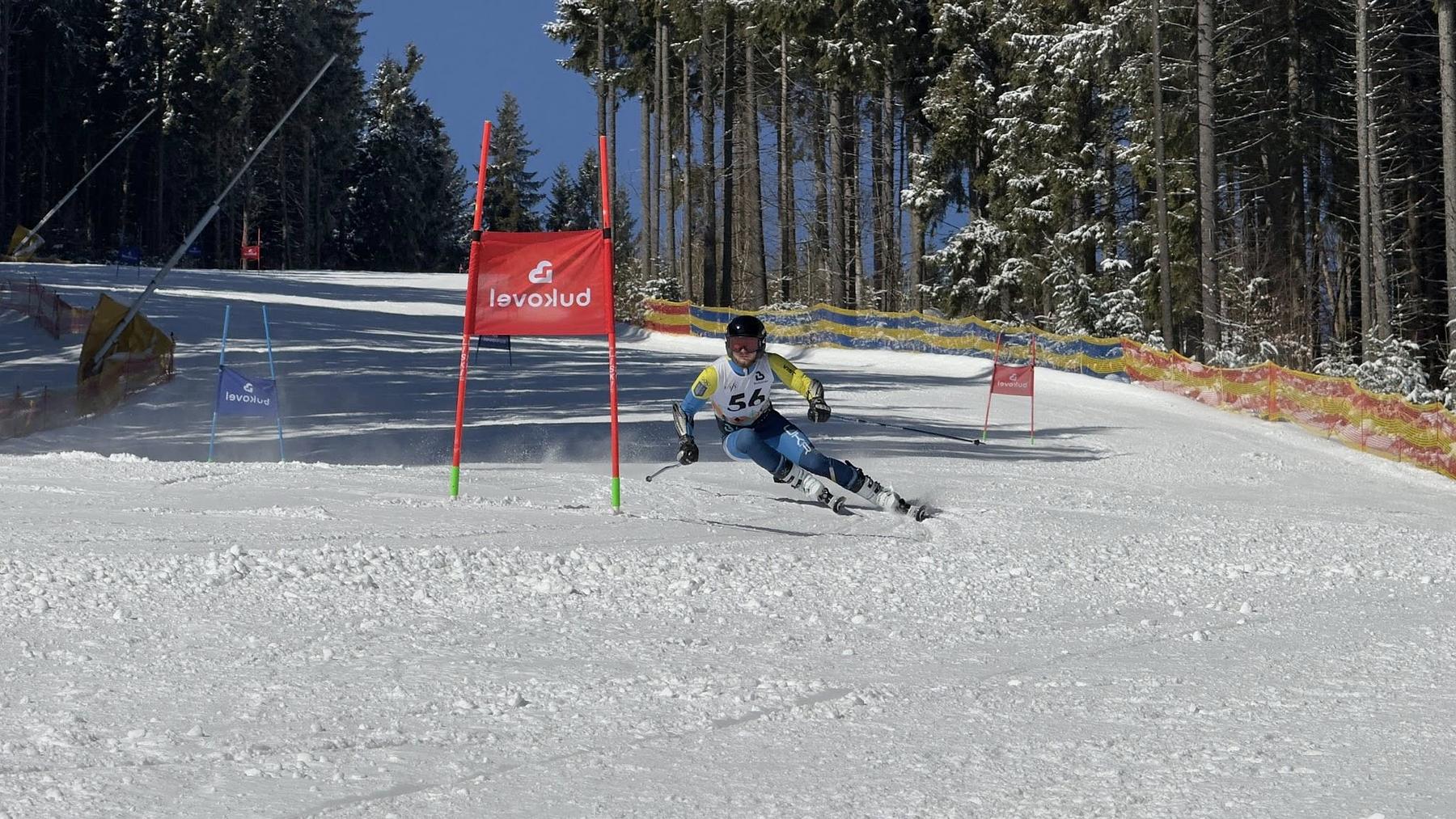
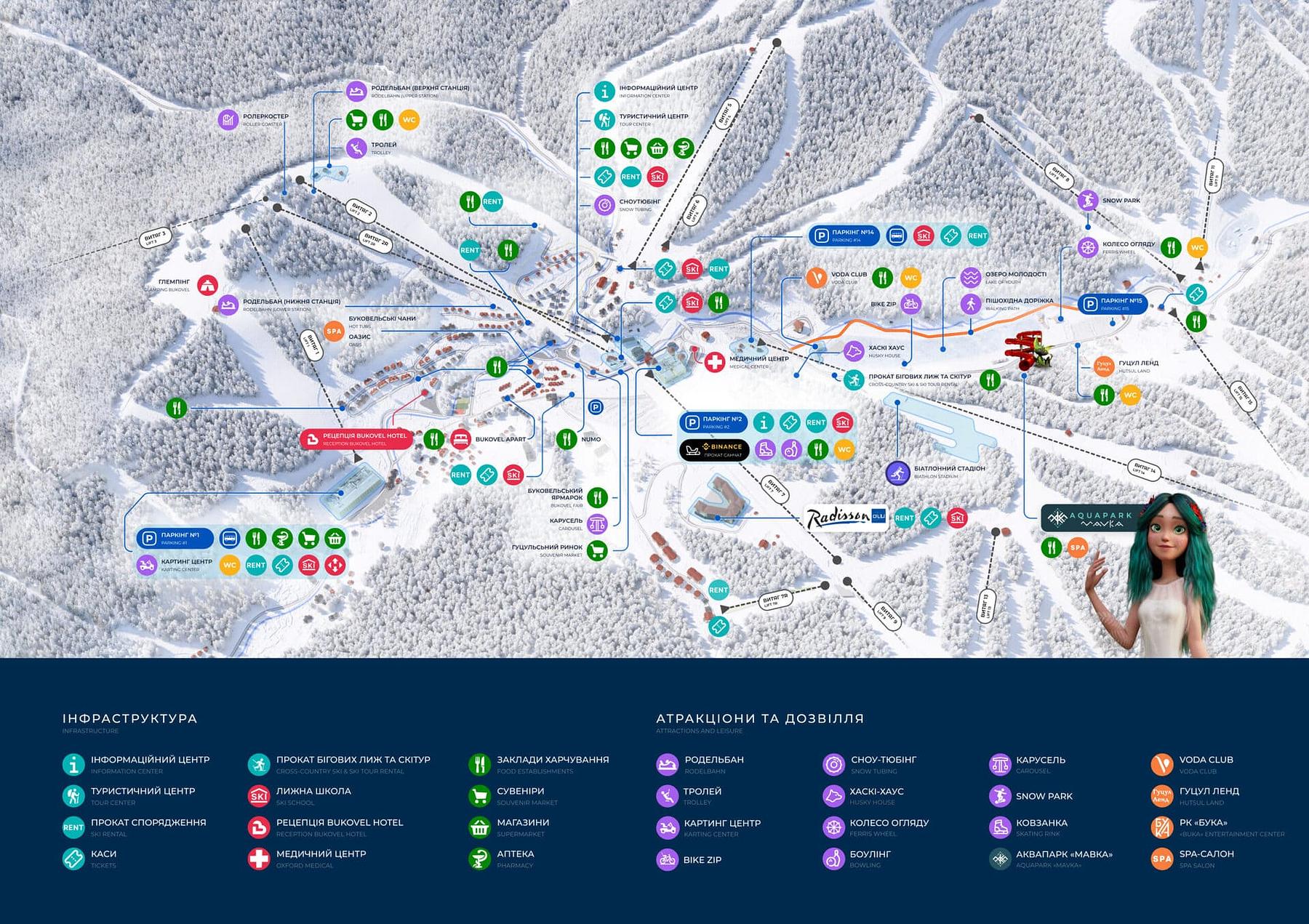
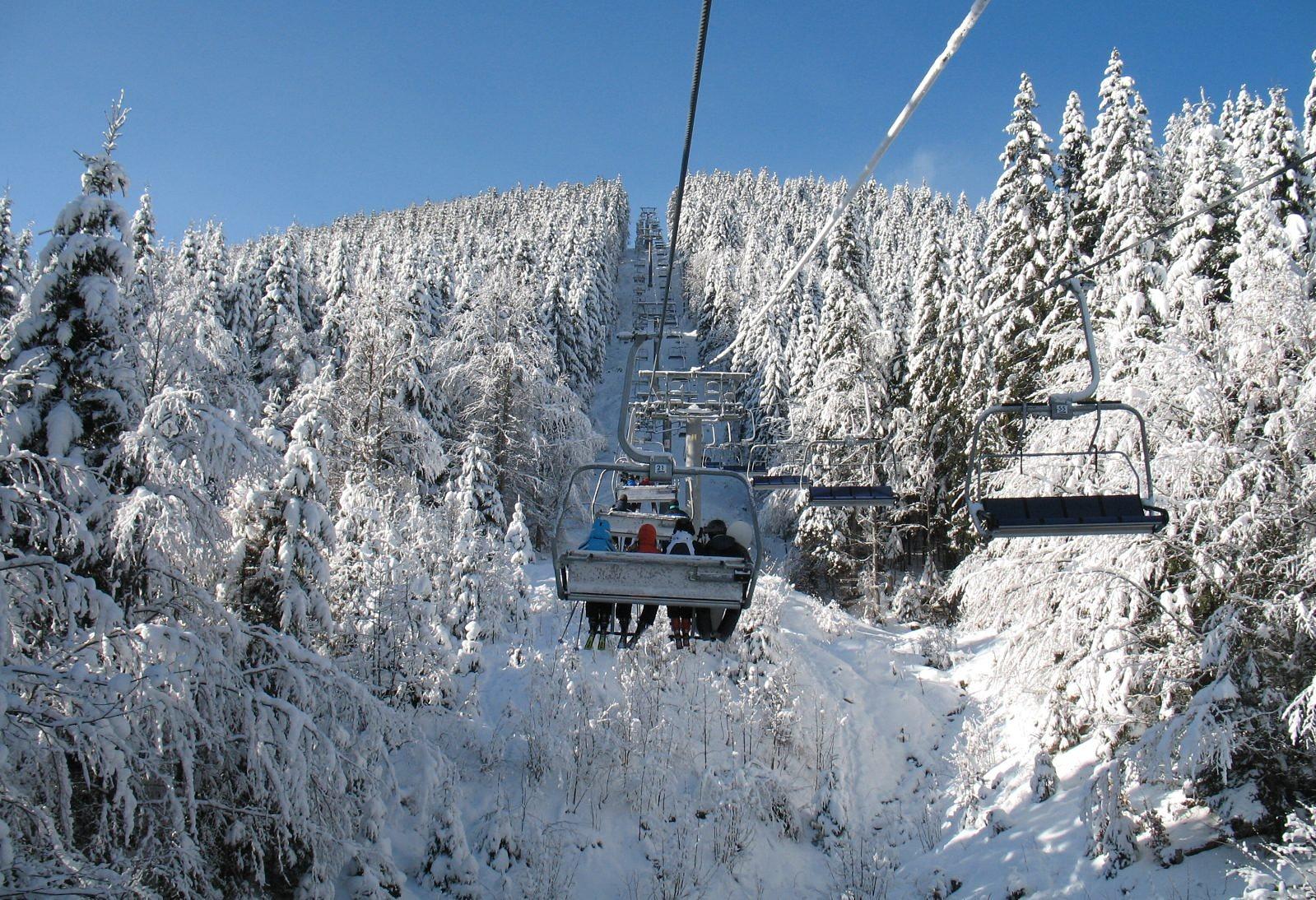
Sixty-eight marked runs spread across five mountains — Bukovel, Dovha and Chorna Kleva among them — from a base at around 874m. Counts of total piste length run from 60 to 75 km depending on who measures; the more useful figure is the lift system, 19 installations moving some 35,000 skiers an hour, almost all of them chairs.
Over half the terrain is graded easy, and that one statistic tells you who this hill is for. Reds serve confident skiers, a few blacks and a snowpark cover the rest, and two runs — usually 2A and 2C — stay lit into the evening. The ski school is graded just as sensibly: a first-timers' package, a technique course, one for people who last skied a decade ago, children's lessons from age three. If you have never clipped into a binding, this is the easiest place in the country to learn.
Photo by Дмитрий Иванов
Photo by bukovel
Photo by Вячеслав Ягодзинский
Summer at the lake
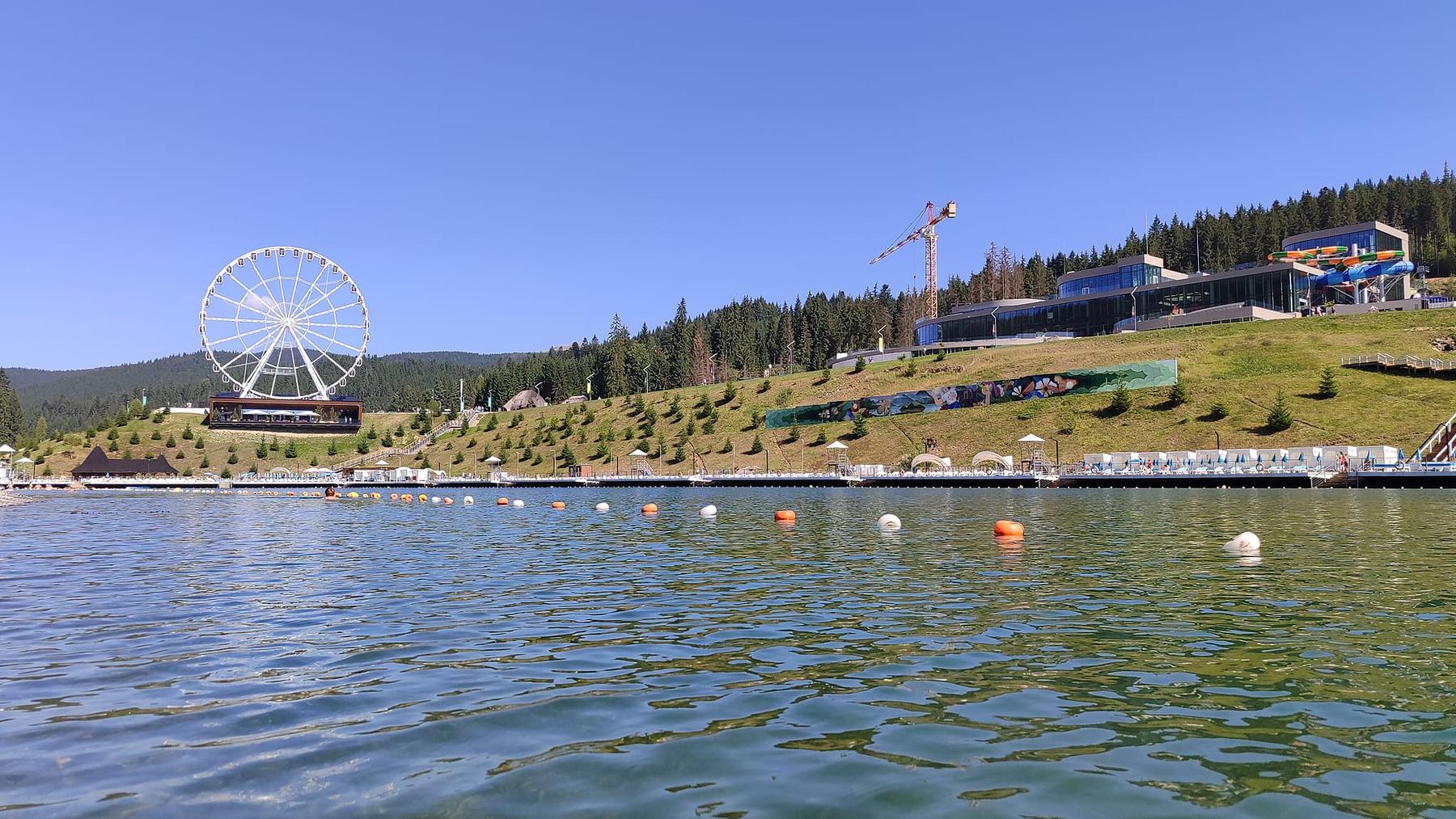
The Lake of Youth was dug in 2014 and is now the resort's summer centre of gravity: 6.8 hectares of water, roughly 750m by 140m and eight deep, holding 20–23°C through the season, with two kilometres of beach and no charge to walk in. In June 2026 it took a Blue Flag, the first mountain lake anywhere to hold one. Loungers, catamarans and paddleboards line it, with the VODA club spa next door.
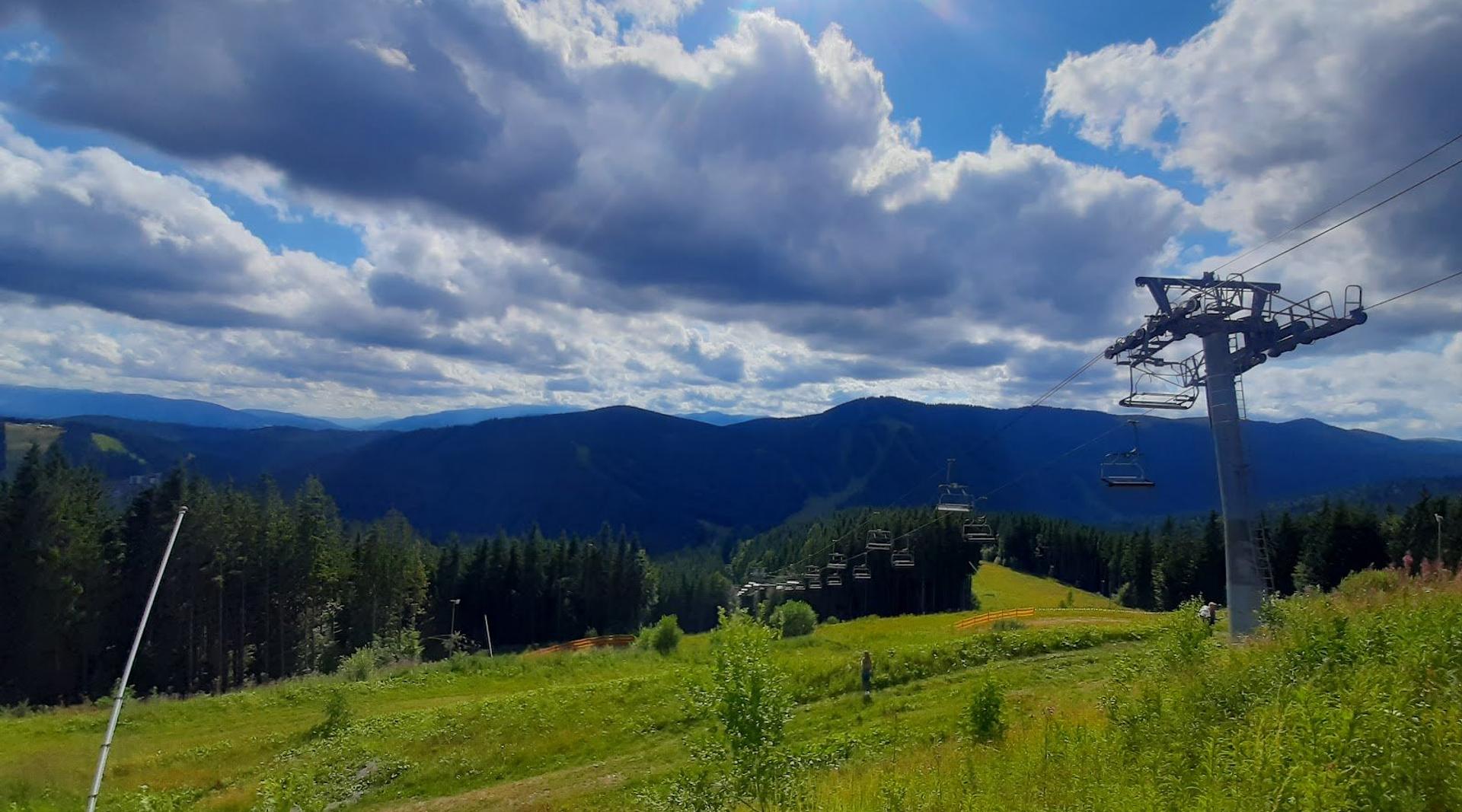
The lifts keep running through summer, roughly nine to five, carrying walkers up for the ridge views and riders to the bike park, where the trails are graded the way the pistes are.
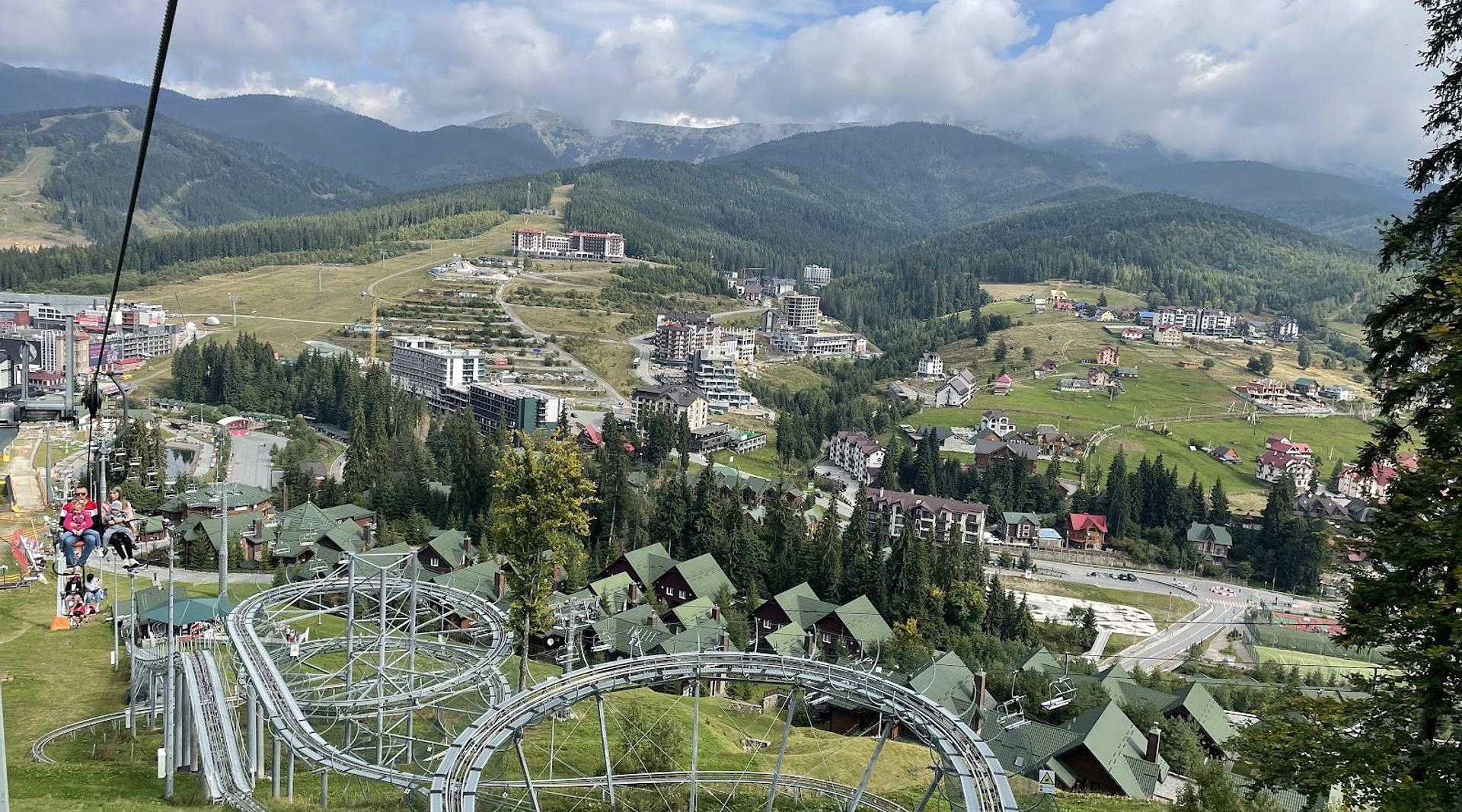
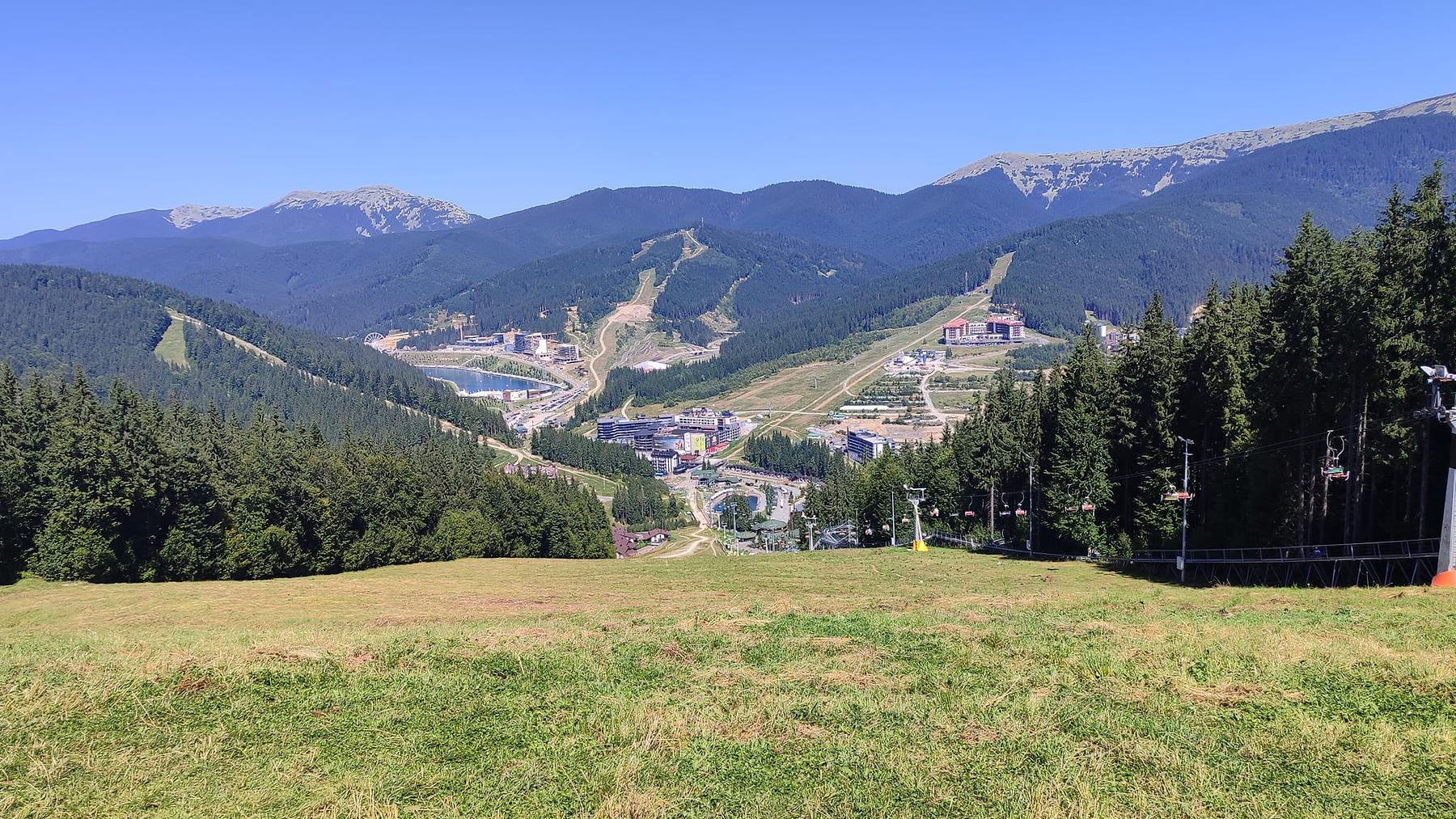
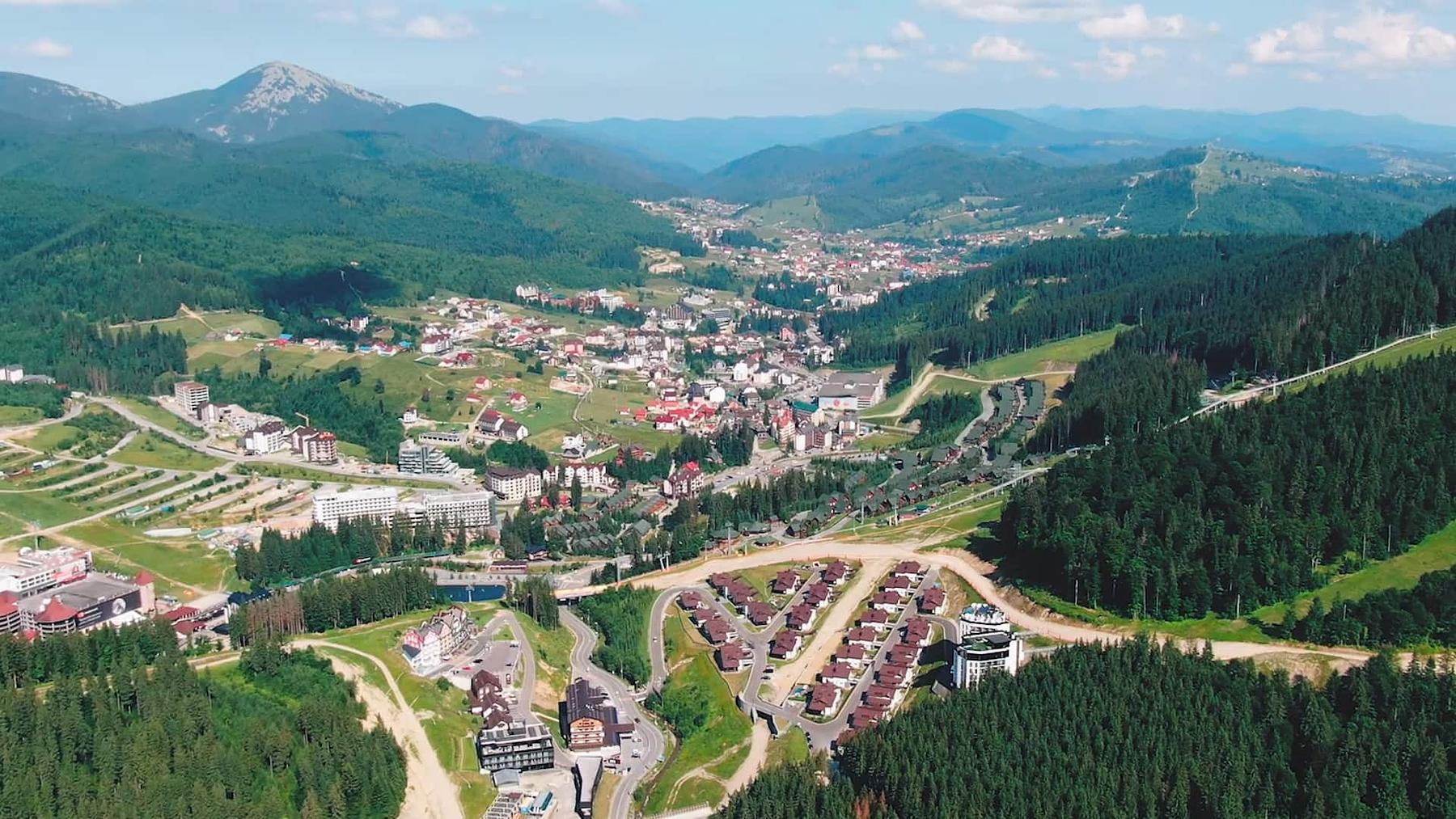
The view from the top lift station over Bukovel
Lake of Youth and the observation wheel
Hutsul Land, the rodelbahn and Mavka
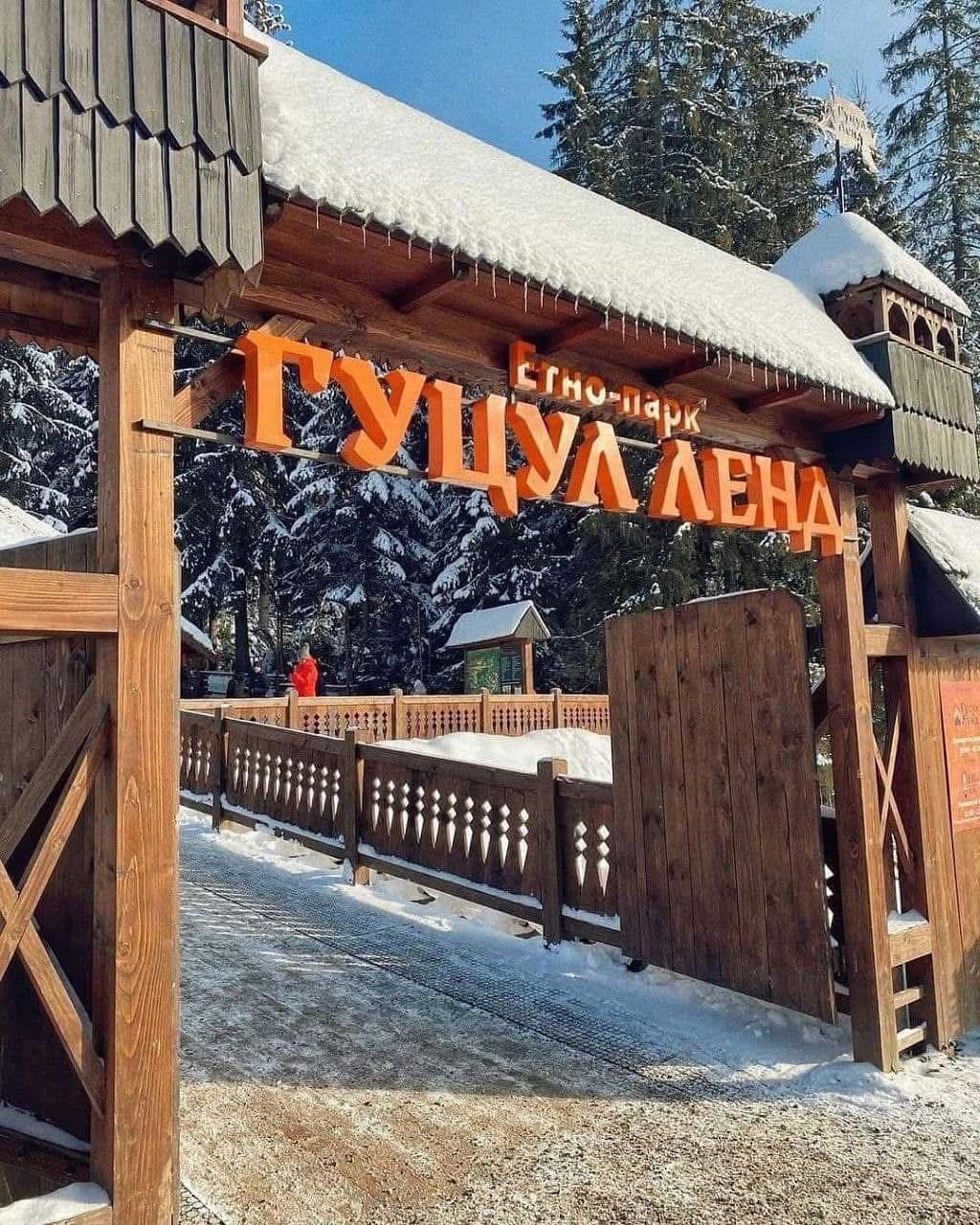
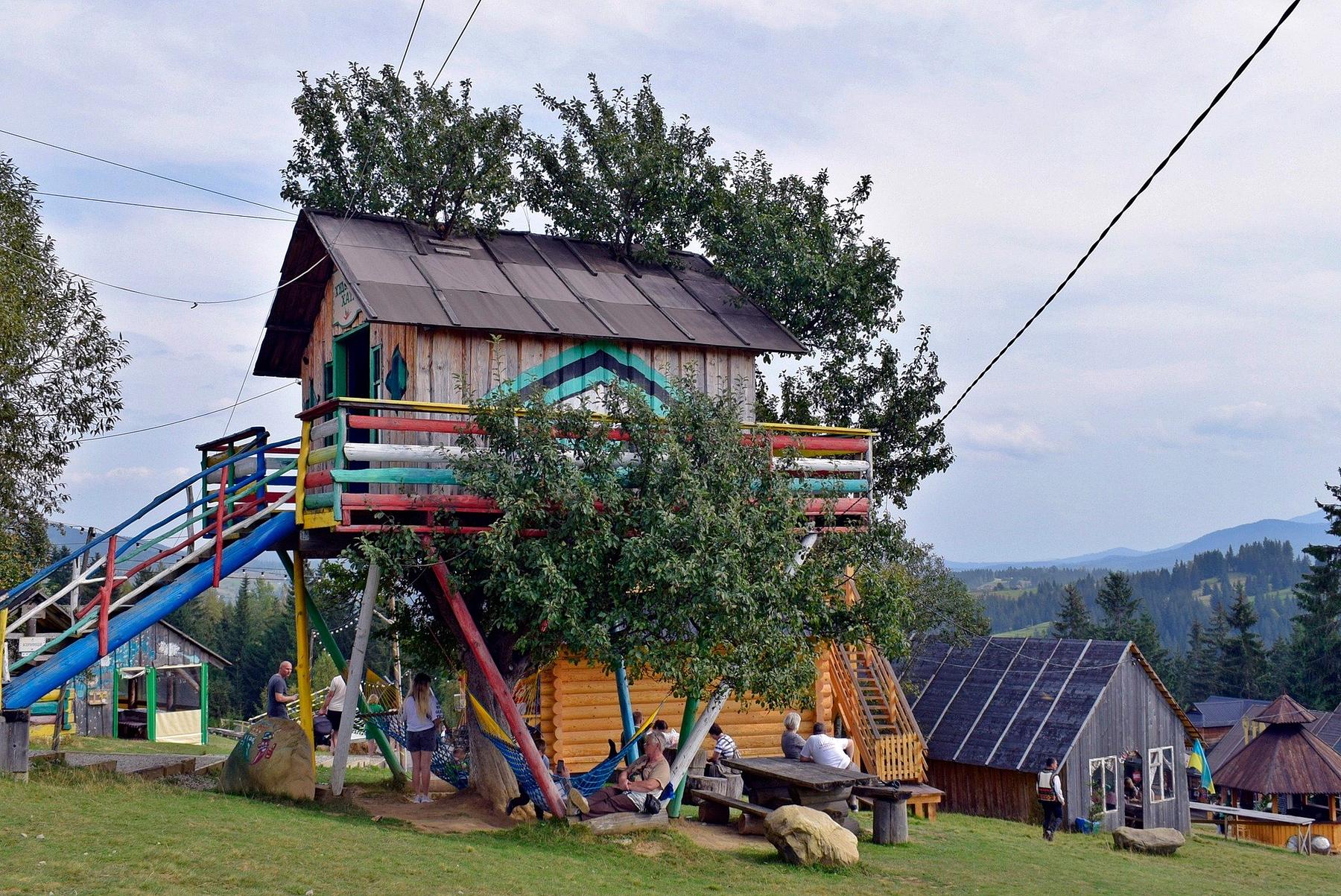
Hutsul Land, the ethnopark a short walk from the lake, is the one attraction here with real content behind it: a skansen of Hutsul, Boiko and Lemko buildings you can walk into and sit down in, with querns to grind grain on, a working loom, cheese made in front of you and a petting zoo alongside.
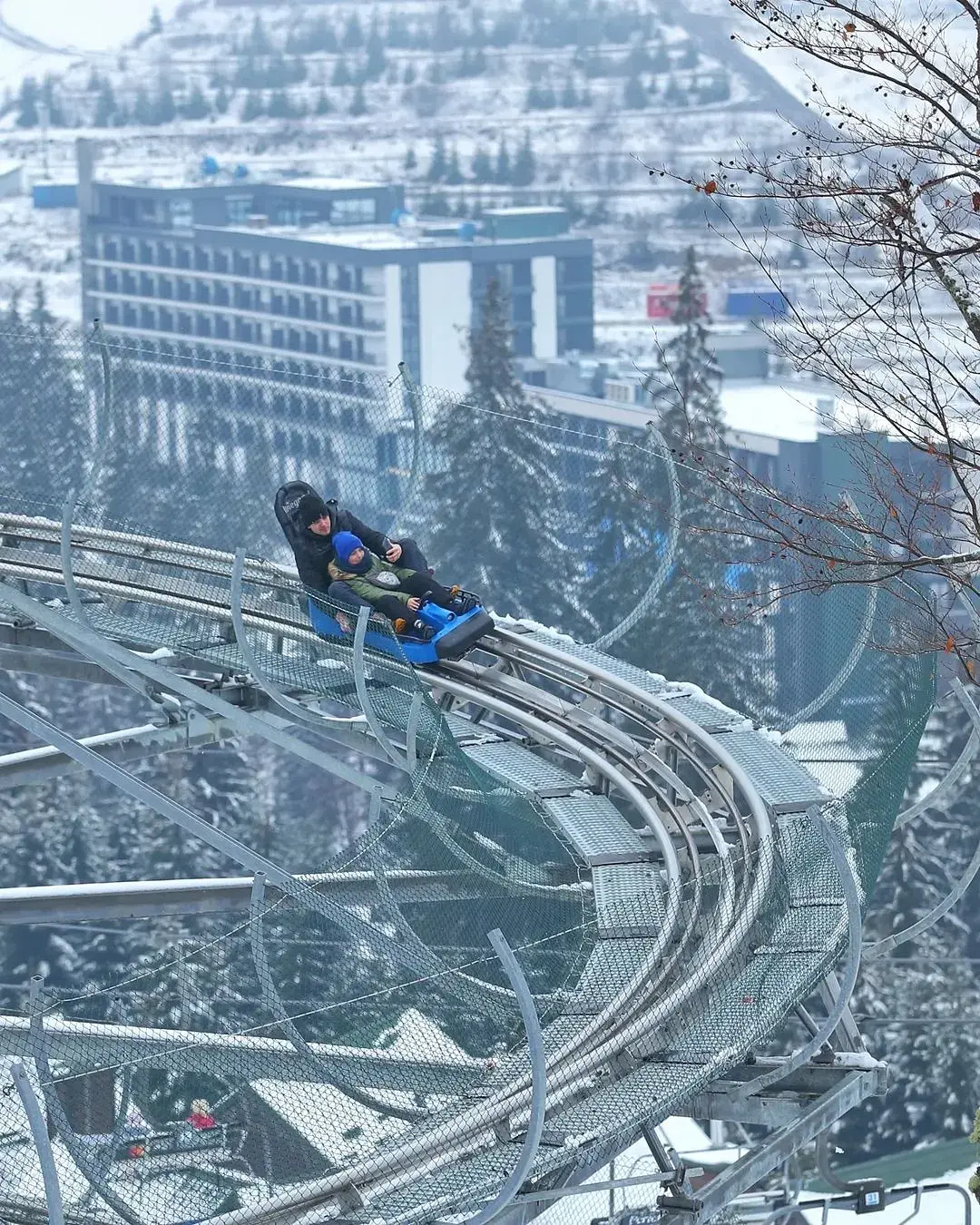
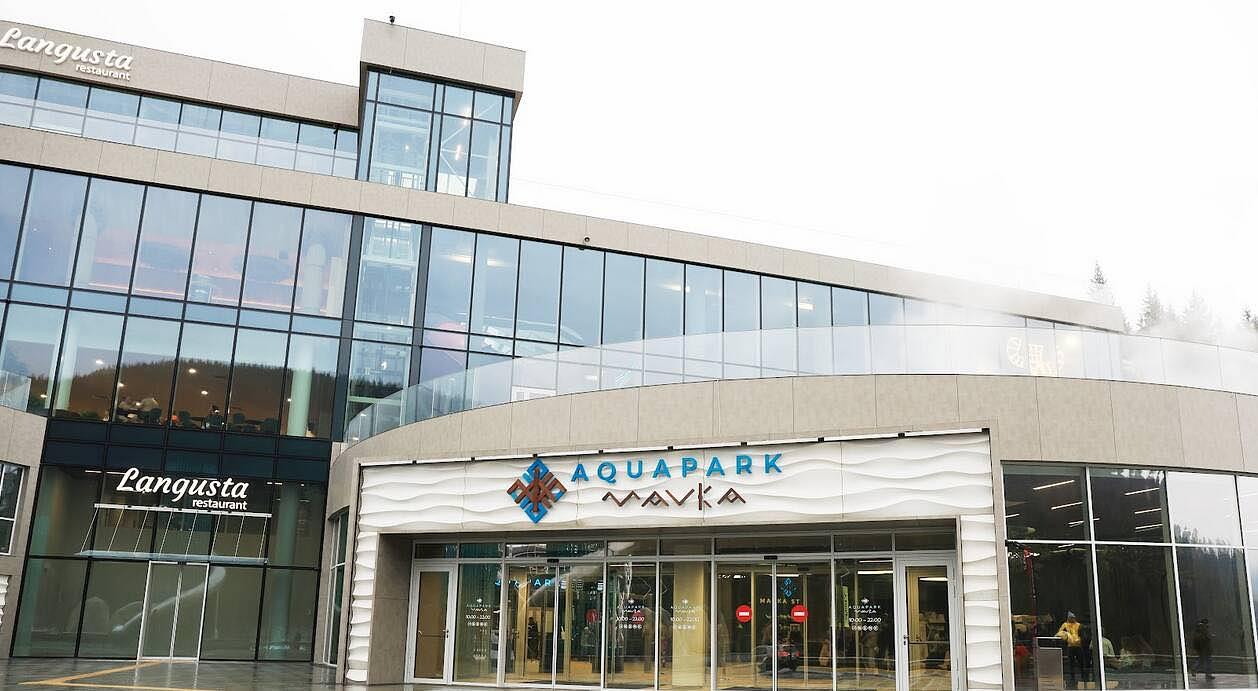
Everything else on that side of the resort is fairground, competently done — a rodelbahn, a zipline over the valley, an alpine coaster, an observation wheel, husky kennels. The Mavka waterpark opened in February 2025 with nine pools, three of them heated to 35°C and open all year, daily from ten until ten.
Hutsul Land
Trips out of the resort
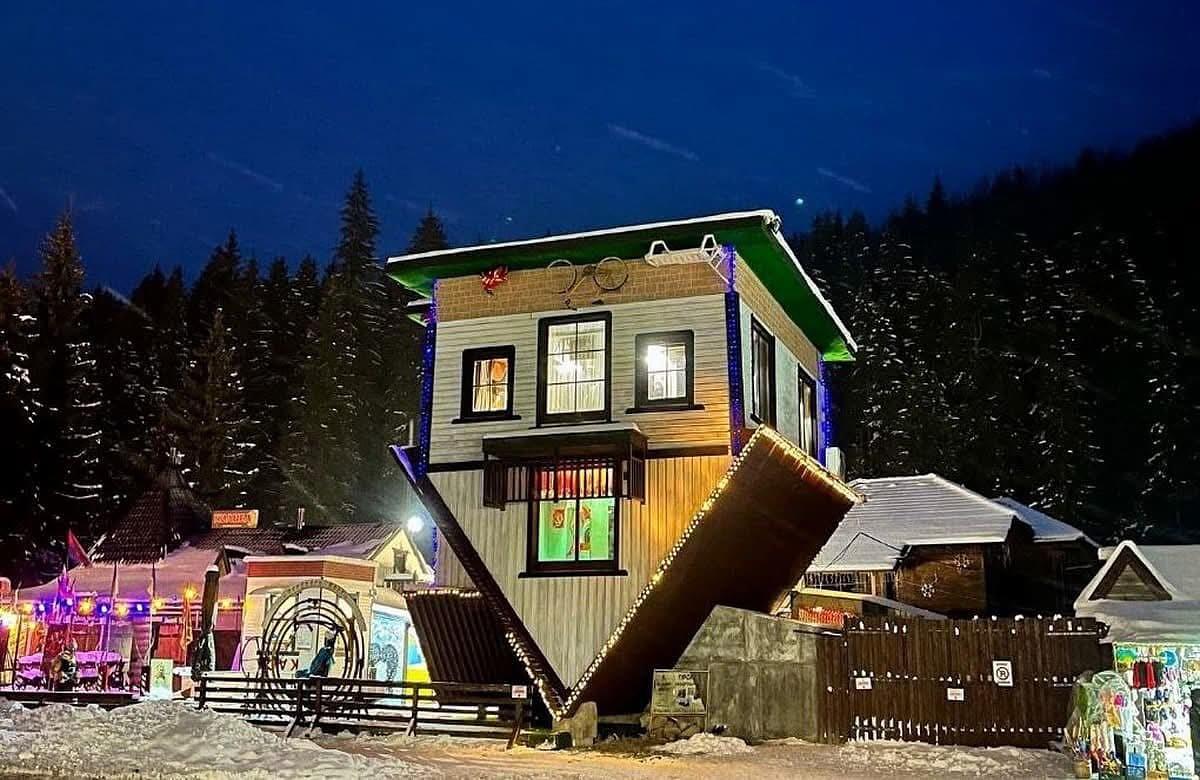
Bukovel is a better base than it is a destination. Zhenetskyi Huk falls make a half-day: drive to the barrier, then walk the last stretch through the forest, which is much of the pleasure. Polonyna Pertsi, an art space on a high pasture, trades on atmosphere as much as on panorama. Polianytsia has an upside-down house, which is exactly what it sounds like.
Further out, Yaremche has the Probiy rapids and the region's largest souvenir market; Vorokhta has its ski jumps; Mt Khomiak and Hoverla are both within a long day. Three or four nights and the resort stops being the trip and becomes the bed you come back to.
The argument over the mountains
Bukovel's growth has not gone uncontested. Forest has been cleared on the resort's own ground for runs and hotels, and Carpathian deforestation more broadly — close to a tenth of the range's forest cover lost in twenty years — is linked by scientists to worsening erosion, landslides and flooding below.
The larger fight has been over a second resort proposed on the neighbouring Svydovets massif by Skorzonera, the company behind Bukovel: some 1,400 hectares, dozens of hotels, capacity in the tens of thousands. Residents and the Free Svydovets campaign fought the planning decisions for seven years, and on 9 October 2024 Ukraine's Supreme Court struck down the appeal ruling that had cleared the way. None of this alters what a week's skiing here is like. It is part of the picture all the same.
Photo by Назар Рябуха
Costs, transport, and who it suits
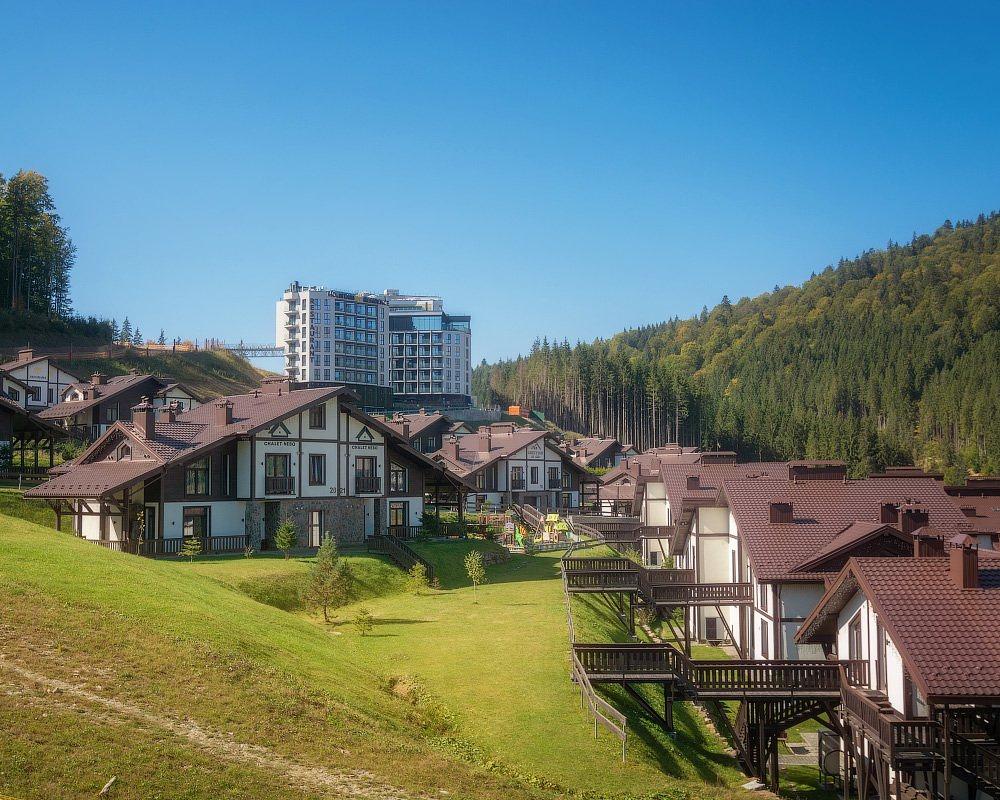
This is the most expensive resort in the Carpathians and makes no secret of it. A seven-day high-season pass has run past 10,000 UAH a head, and the New Year fortnight is a category of its own. Eating within sight of a lift costs noticeably more than eating in Polianytsia or Tatariv, and rooms in the surrounding villages undercut the resort hotels by a wide margin.
Trains run to Tatariv-Bukovel station, 15 km short of the resort, with buses, taxis and hotel transfers from there. Come for the infrastructure, the ski school, the spa, and a group that doesn't all want the same holiday. If you want quiet, cheap and unpolished, Vorokhta and Verkhovyna are half an hour away, and Drahobrat is a different proposition entirely.
Location
Bukovel
Урочище Щивки 25, Поляниця, Івано-Франківська область, 78593, Поляниця
На жаль, за останні кілька років гірськолижний курорт помітно погіршився. Цього сезону ситуація вже критична: траси сильно перевантажені й місцями стають небезпечними для катання. Видно економію на нічній підготовці - після обробки одна частина схилу лишається нормальною, а інша зберігає розбитий стан ще з попереднього дня. Коли ближче до 11:30 сходяться дві хвилі відвідувачів, то вже за годину траси фактично зникають. Раніше це ще можна було пояснити теплою зимою, але тепер така відмовка не працює.
Окремо засмучує питання зі страховкою. Тепер її не можна оформити на касі, і це дуже незручно. За правилами це можна зробити лише протягом 10 хвилин після купівлі скі-паса, але біля кас немає публічного Wi-Fi. В один із днів ще й не було мобільного зв'язку, тож купити страховку взагалі не вдалося. У поєднанні з проблемами на трасах це залишає дуже неприємне враження.