Yaremche
Map: Yaremche
Where to go in Yaremche
Where to stay in Yaremche
Where to eat in Yaremche
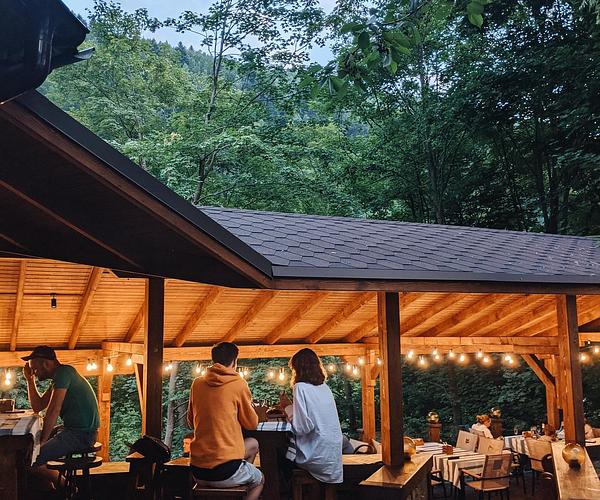
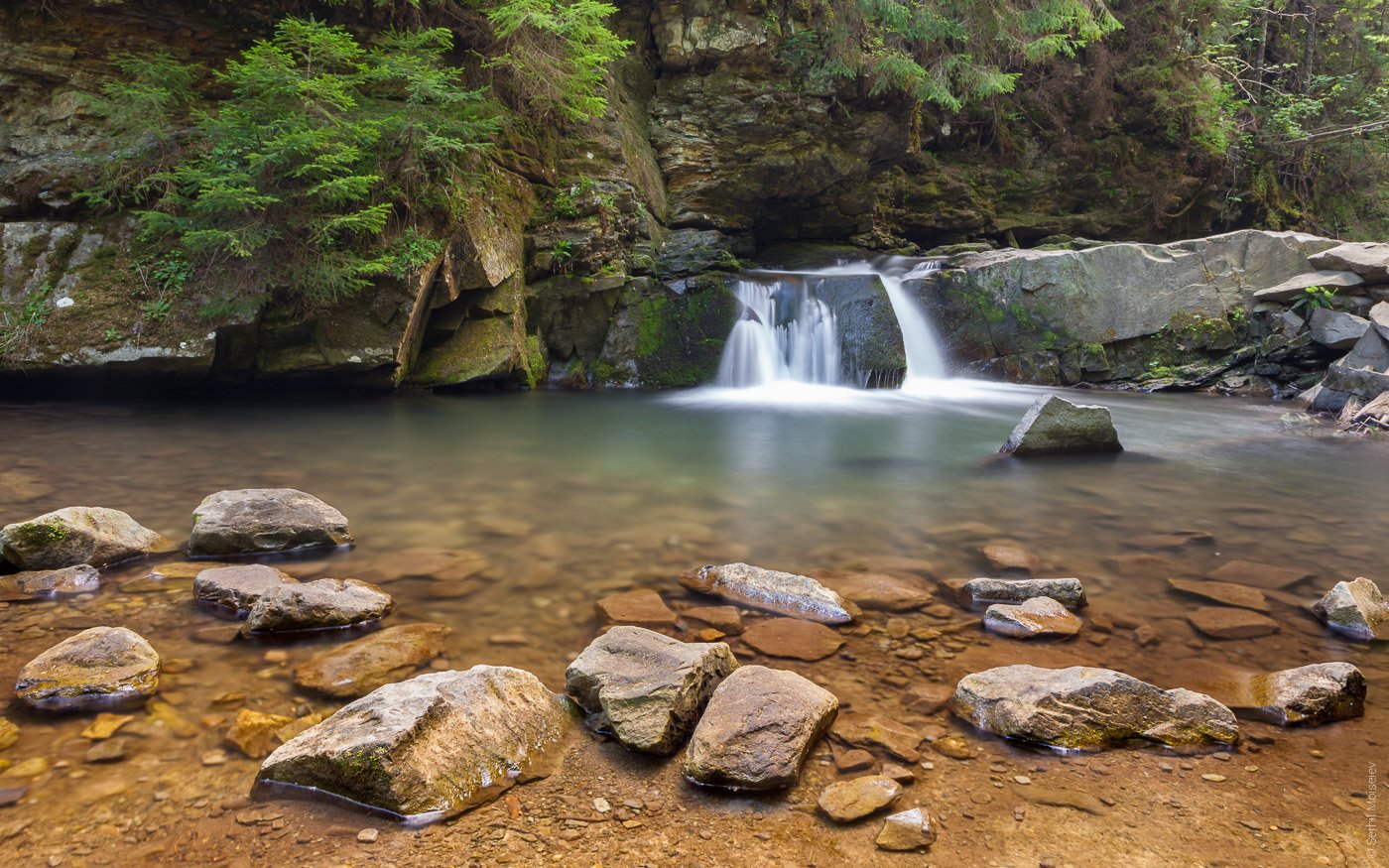
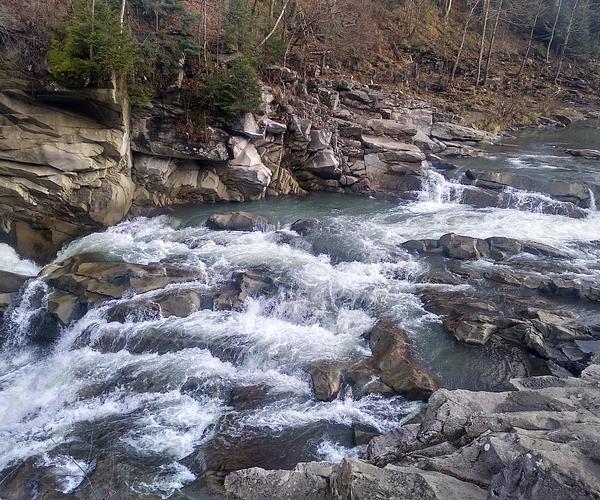
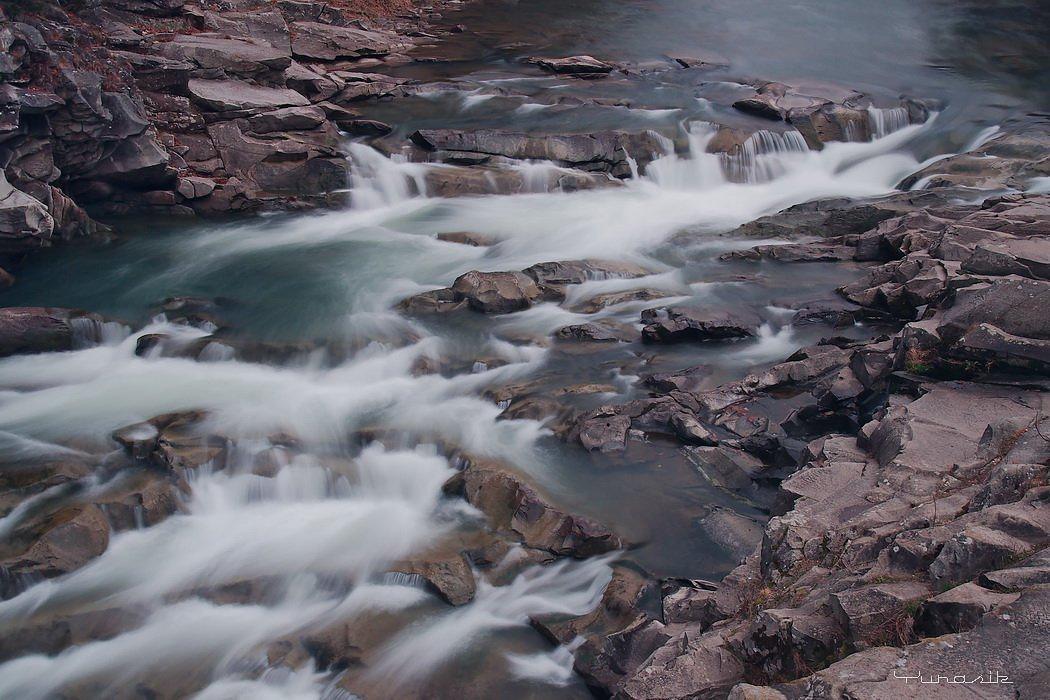
Yaremche's headline waterfall is a two-minute walk from a souvenir stall. The Prut forces itself through a slot of rock in the middle of town, directly below the main road, and Probiy is loud enough that you hear it before the market comes into view. It is only about eight metres high — the drama is in the volume of water shoved through a narrow gap, and in the fact that you can stand over it a quarter of an hour after leaving the train.
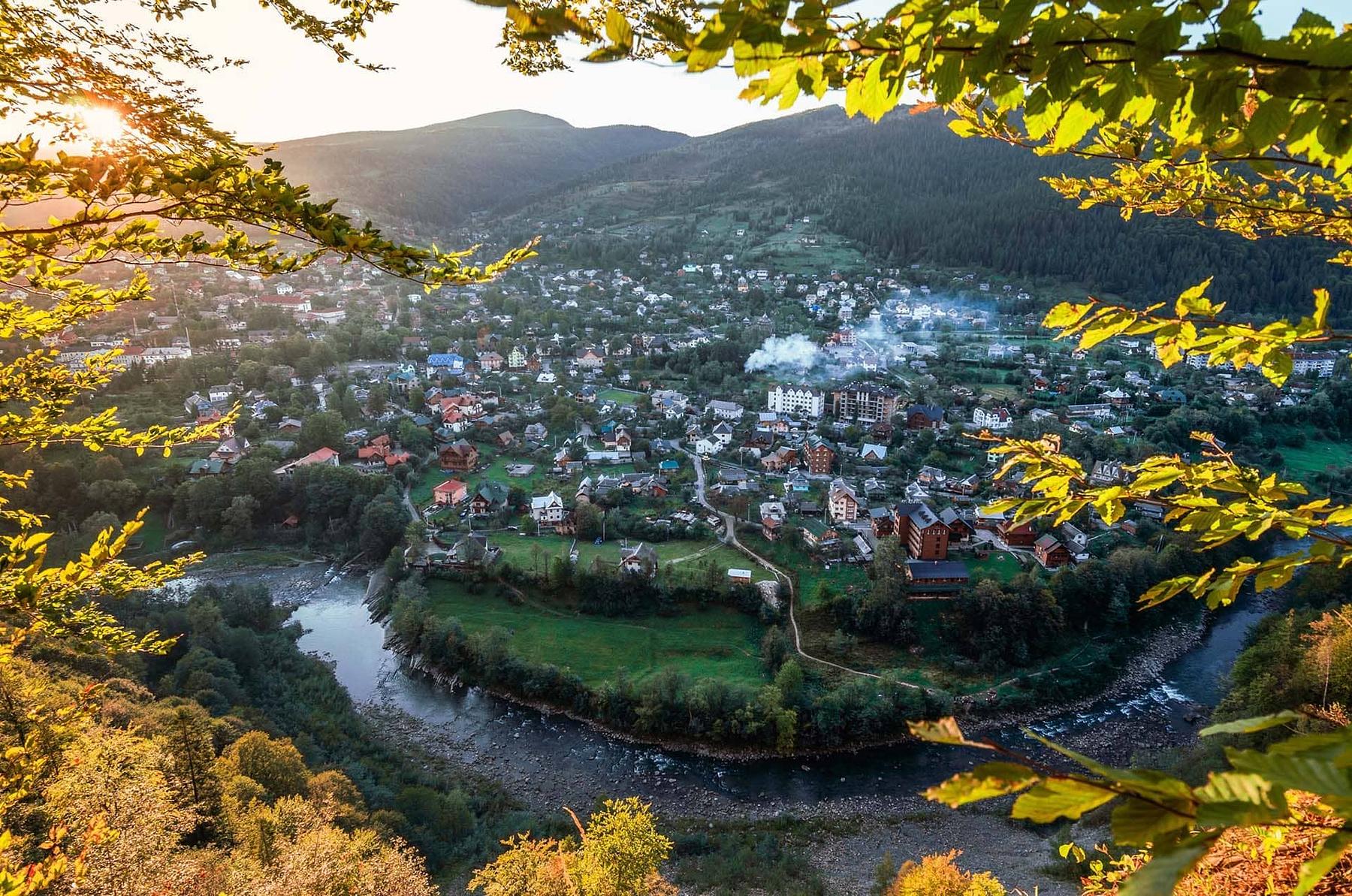
That geometry explains the town. Yaremche sits at around 585m in the Prut valley, on the road almost everyone driving into the Ukrainian Carpathians uses — the road to Mykulychyn, Tatariv, Bukovel and Vorokhta. Most people stop for an hour. The ones who stay get the least complicated mountain holiday in the country: a mainline station in the centre, the widest choice of beds and kitchens in the valley, and enough within walking distance that a day passes without a car.
What the railway did
The town is first mentioned at the end of the 18th century, and one local telling has it named for a Hutsul settler, Yarema Hodovanets. What made it a resort was the line. The Stanislaviv–Yaremche–Vorokhta–Rakhiv railway opened in 1894 to move Carpathian timber into the industrial parts of Austria-Hungary; within a season or two it was carrying holidaymakers from Lviv, Kraków and Warsaw in the other direction.
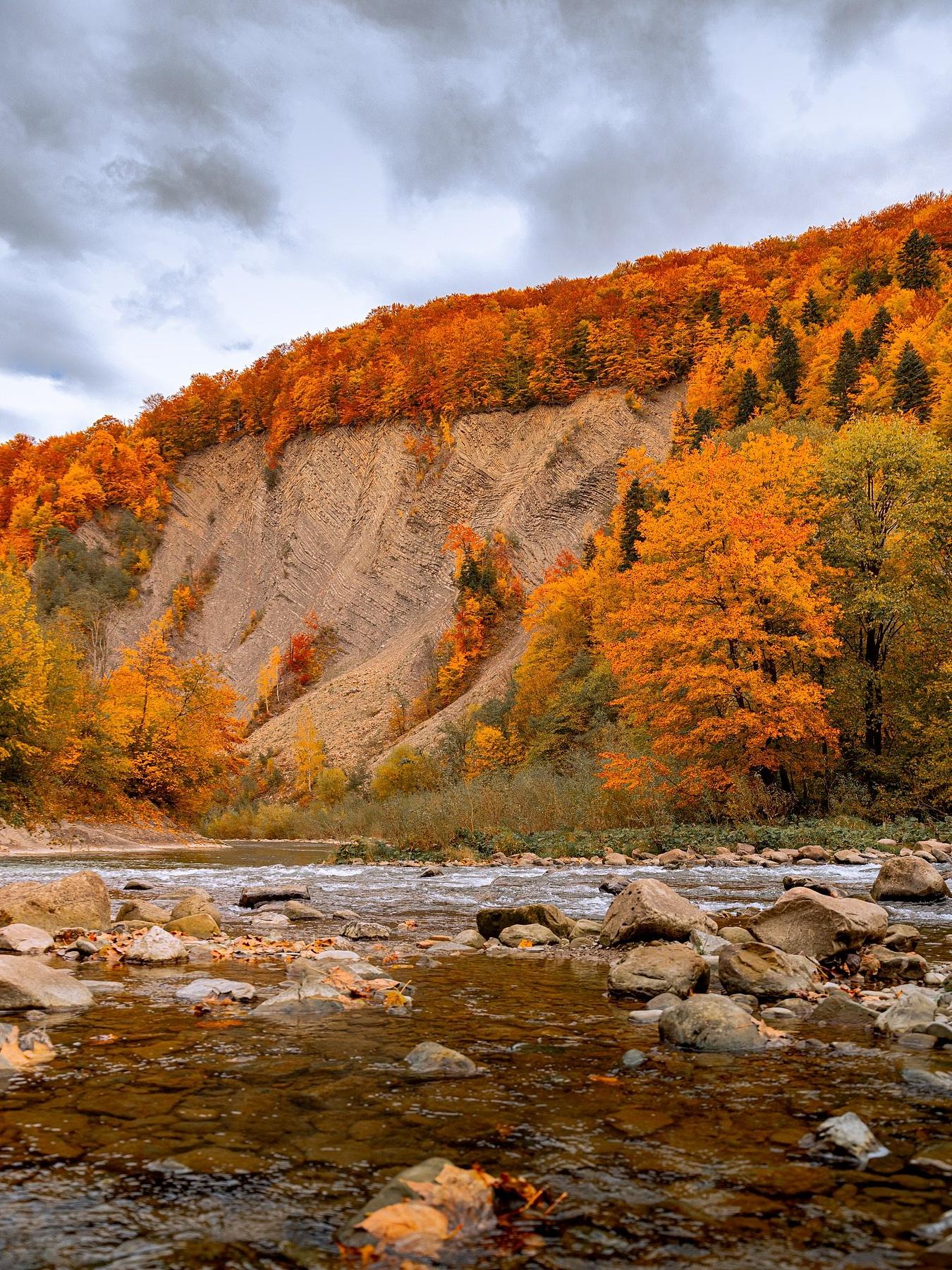
The fashionable addresses then were Dora and Yamna, now districts of Yaremche and rarely named separately. The forests the railway was built to cut are protected: in 1980 they became the core of the Carpathian National Nature Park, the first national park in Ukraine, whose boundary starts about where the streets end.
The town you can do on foot
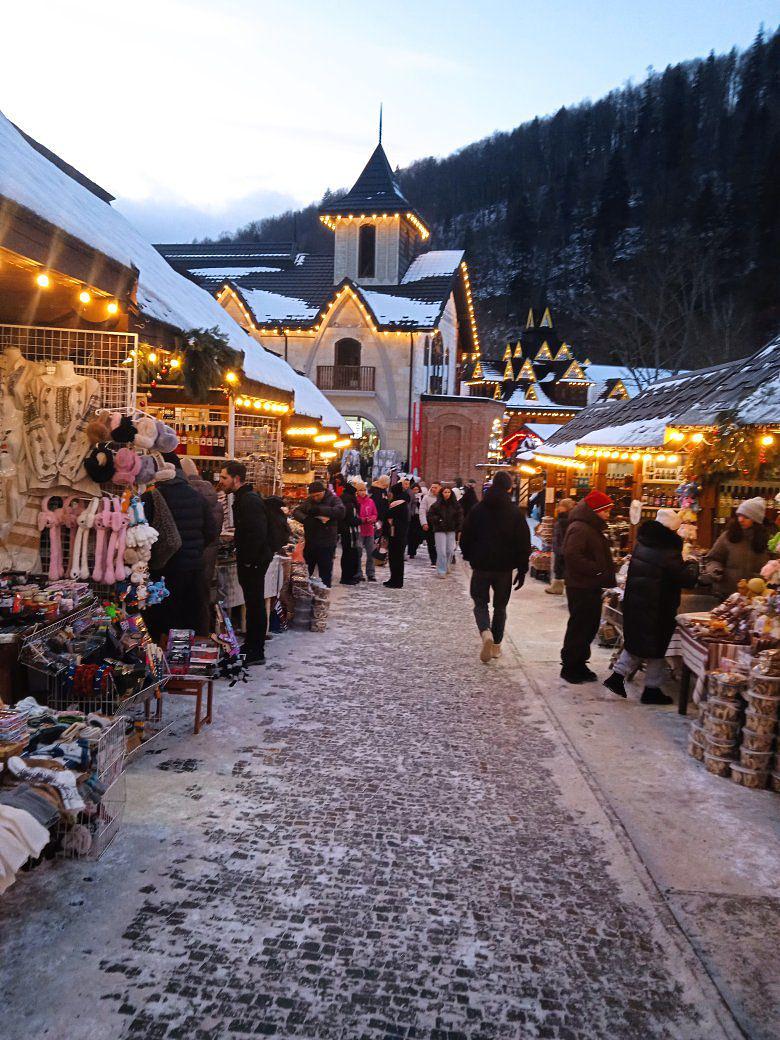
Beside the falls is one of the best-known souvenir markets in the Carpathians, worth a walk-through even if you buy nothing. The wool is the reason to look properly: lizhnyky, the thick shaggy Hutsul blankets, hang among carved wood, ceramics and embroidered shirts. The food stalls beat the crafts for value — brynza, mountain cheese pressed into little horses and deer, honey, herb teas. Ask where something came from and you usually get a straight answer.
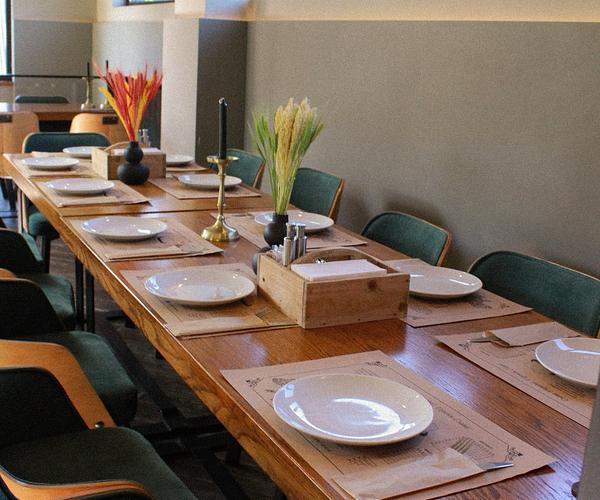
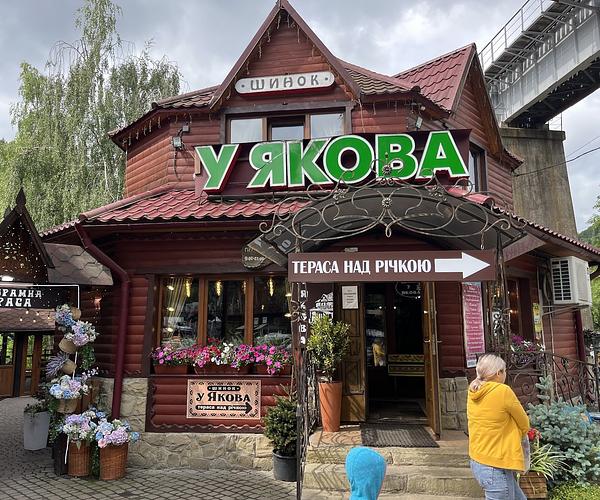
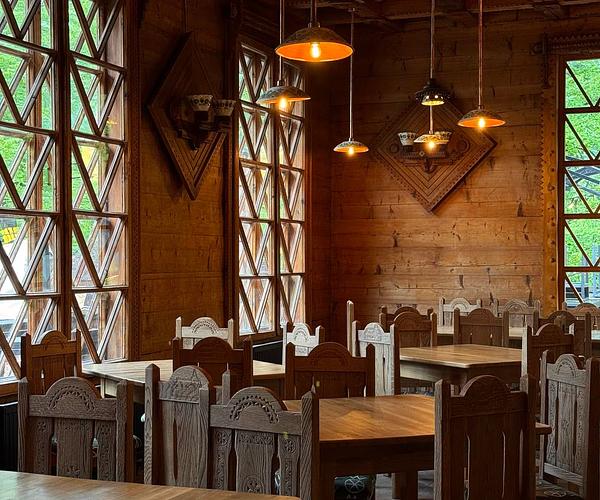
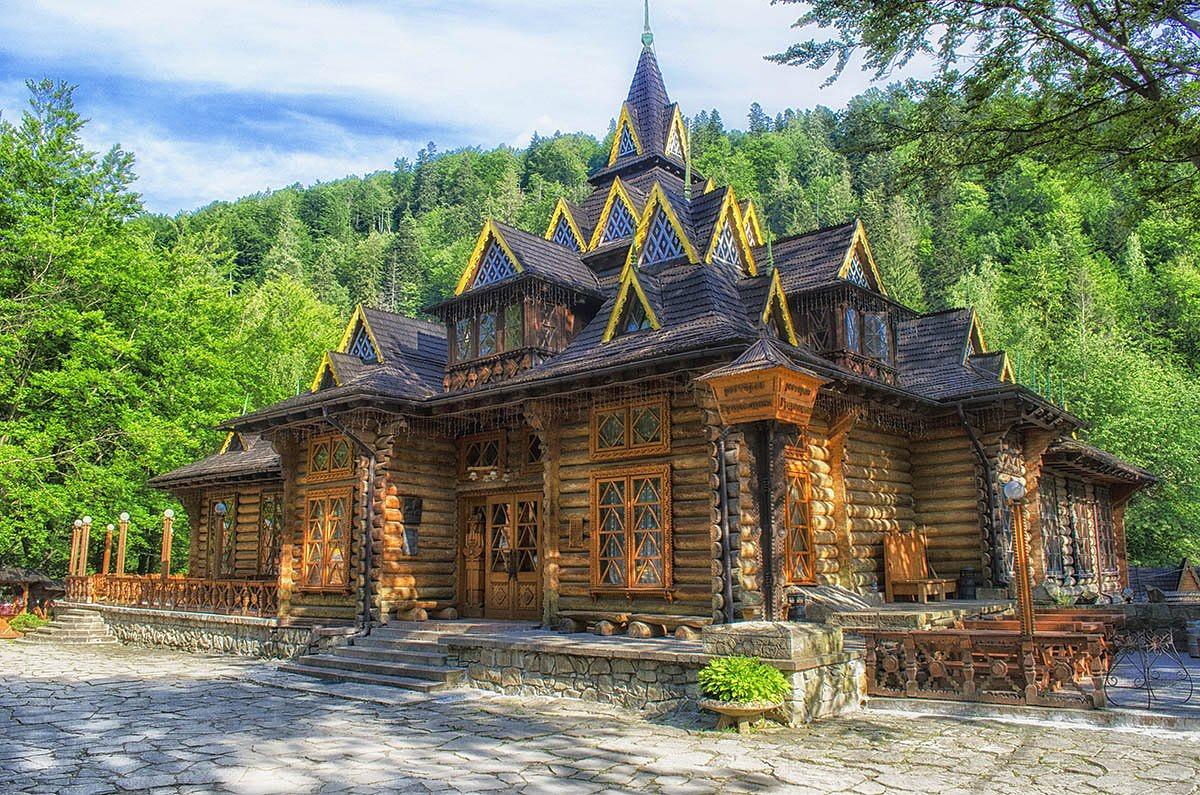
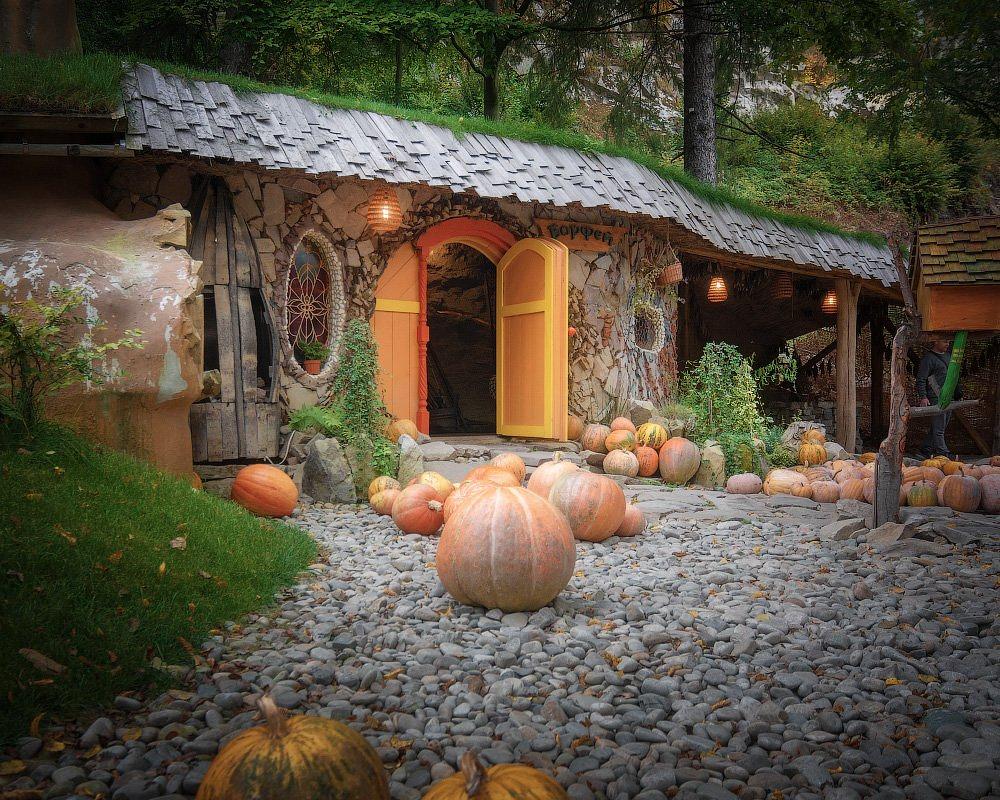
A few steps away stands the building Yaremche is known for after the water. The Hutsulshchyna restaurant went up in 1956 to a design by Ivan Bodnaruk, in carved timber and — the claim everyone repeats — without a single nail. It appeared in Soviet films and helped establish what people now think of as Hutsul style in large buildings. Then it spent years shut and rotting. Two local businessmen bought it in 2025, restored it over the summer and reopened it that autumn, with part of the menu worked out by the chef Yevhen Klopotenko. The room is worth the detour whatever you make of the cooking.
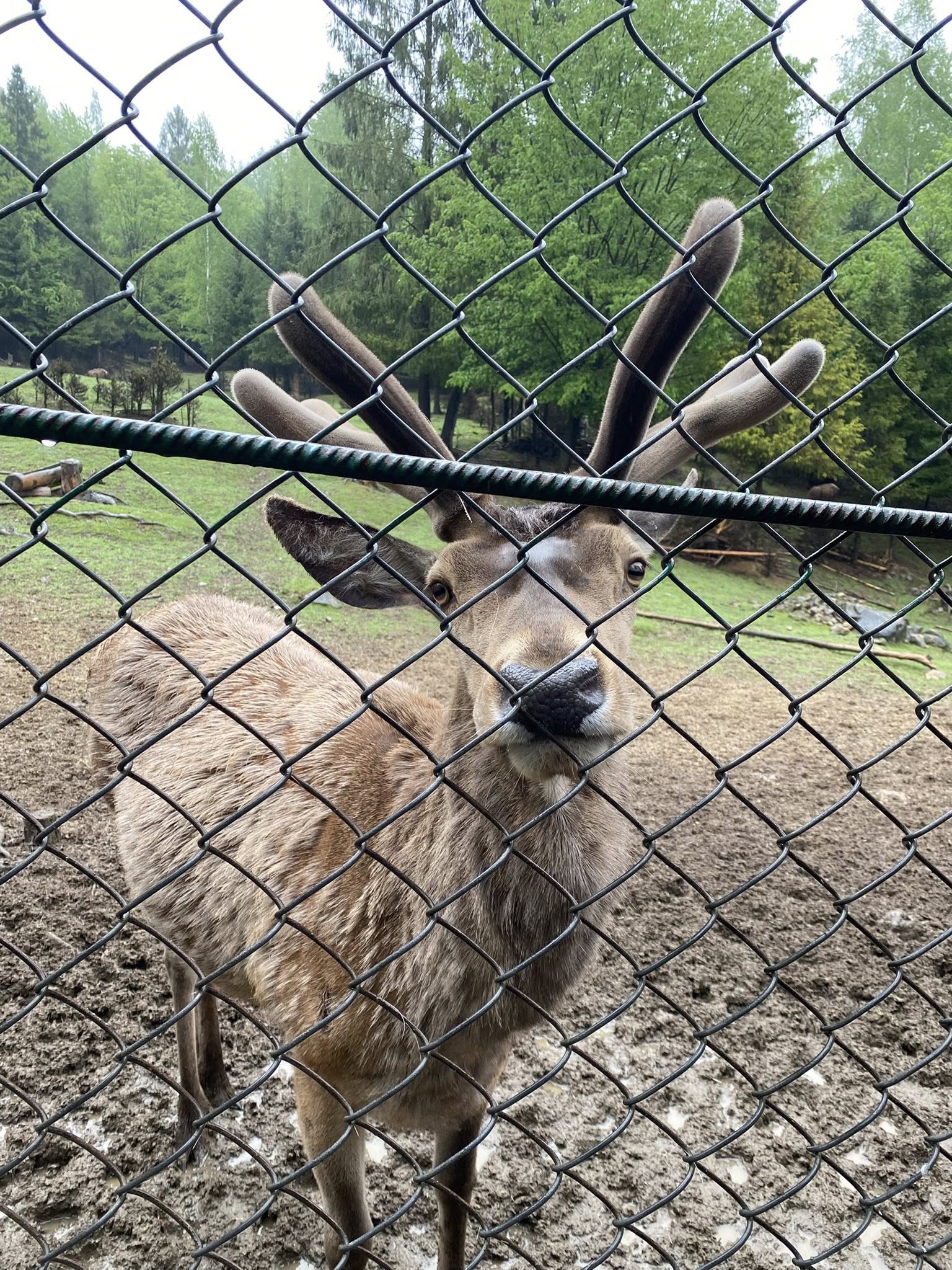
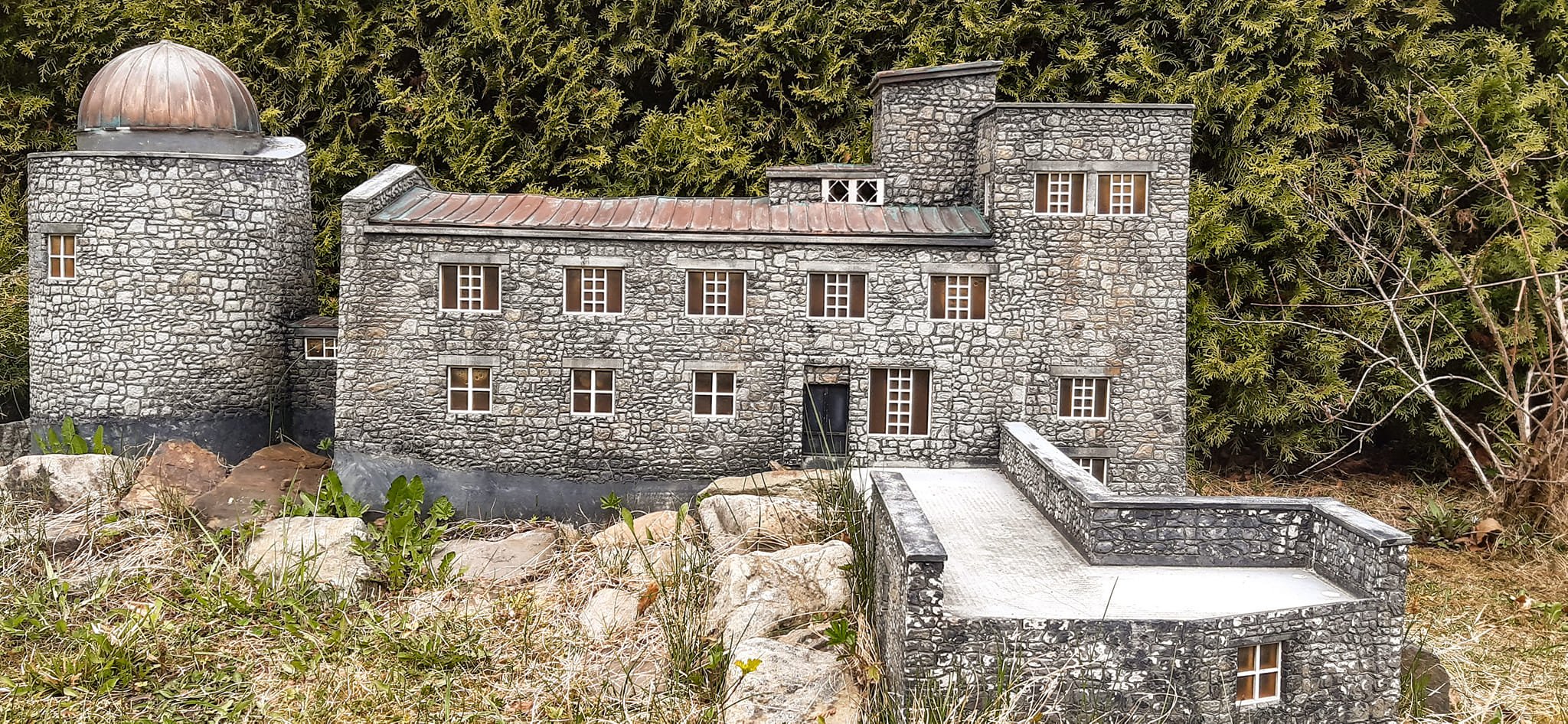
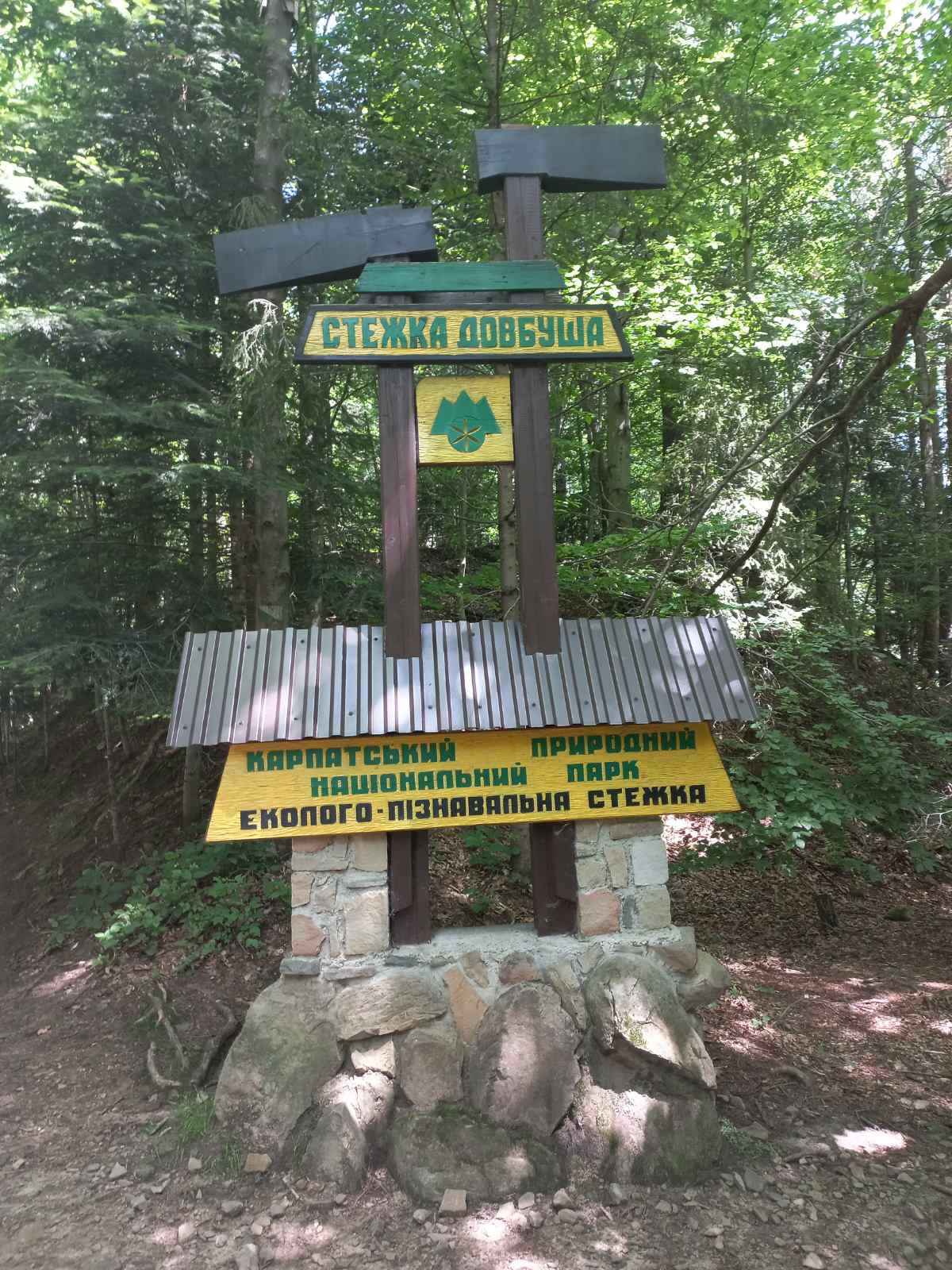
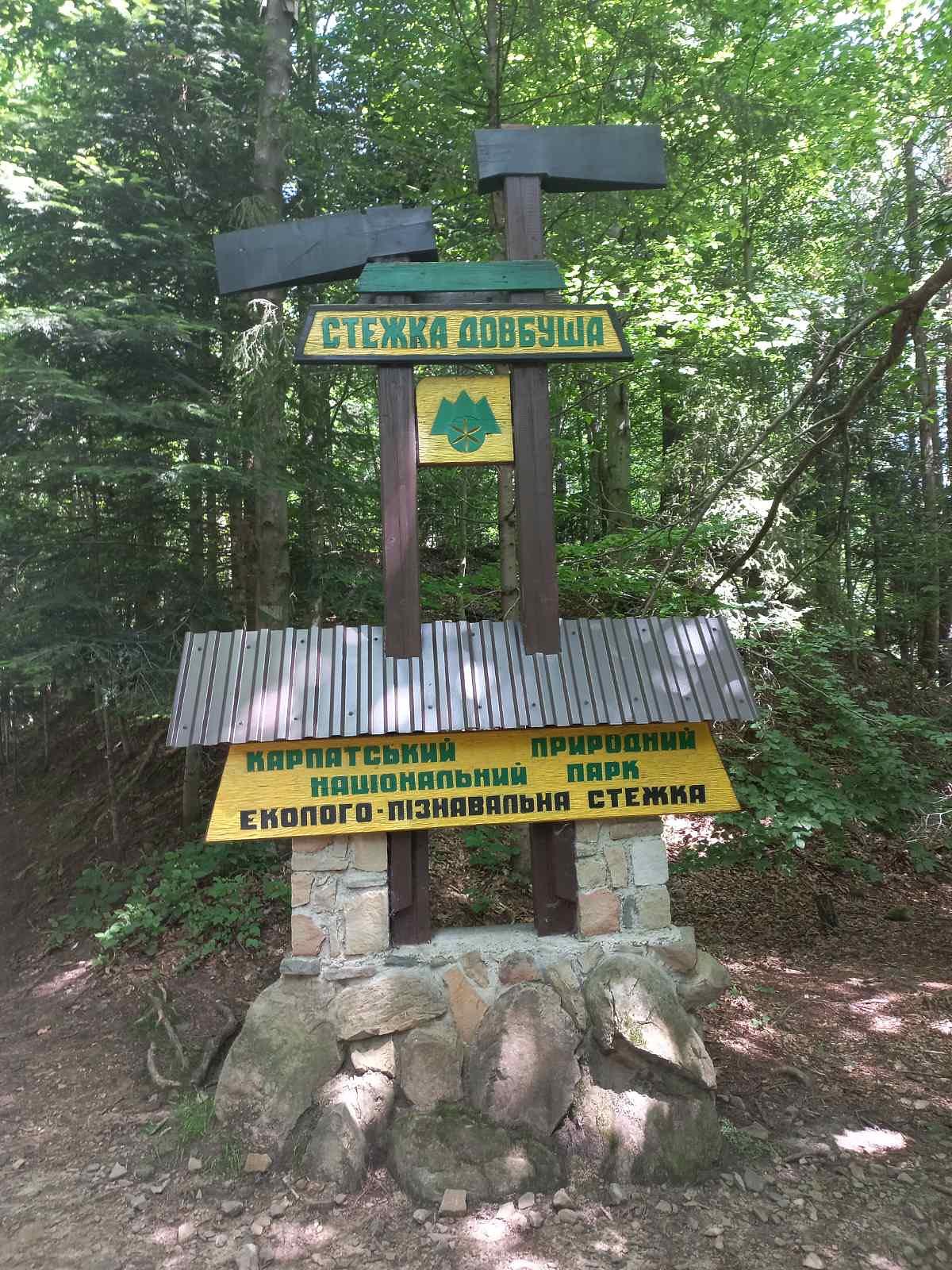
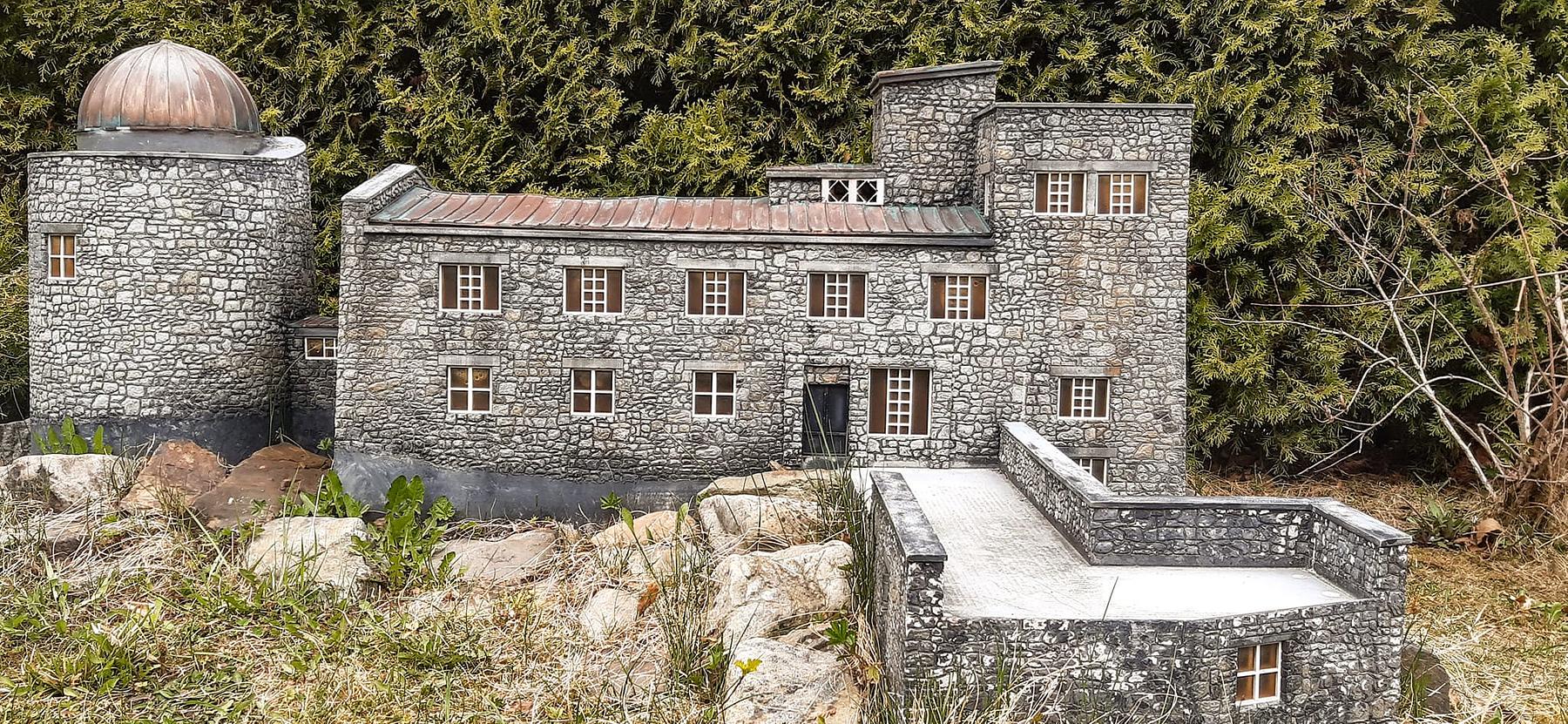
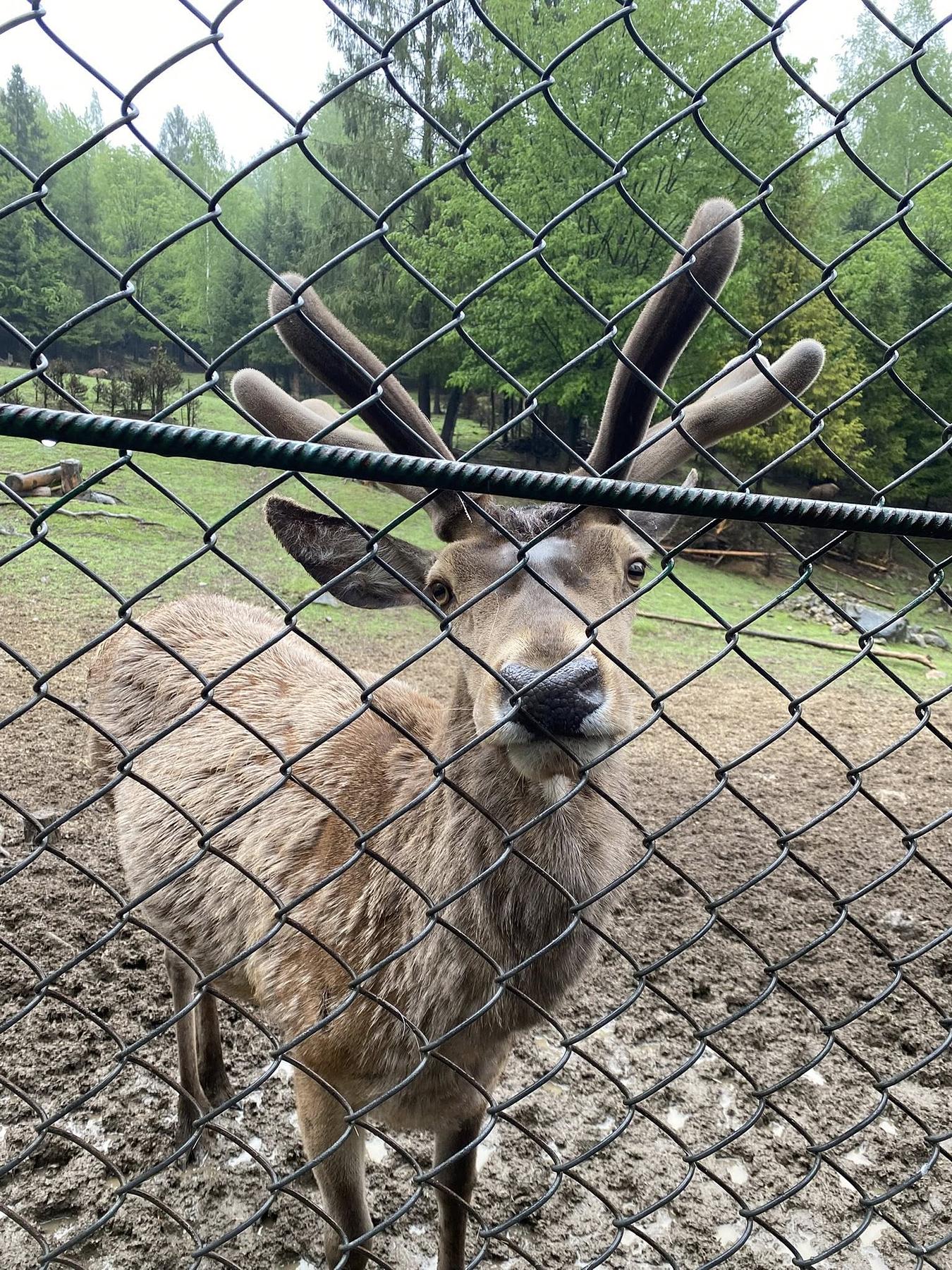
The rest of the in-town list is undemanding by design: Elephant Rock on the slopes of Makovytsia, which looks exactly as advertised; the Dovbush Trail through forest and crags, a walk rather than a climb; a miniature park of scale-model Carpathian churches and bridges; a deer enclosure and a barefoot path of moss, bark and pebbles near Vedmezha Hora; and the old wooden churches of Dora and Yamna, the quietest thing in town. None of it needs a morning. That is the point of the place.
The day you leave the valley floor
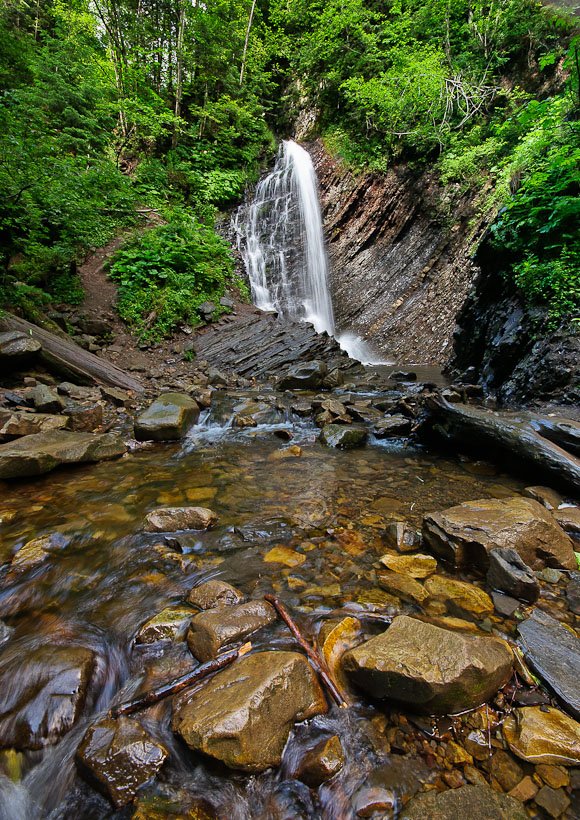
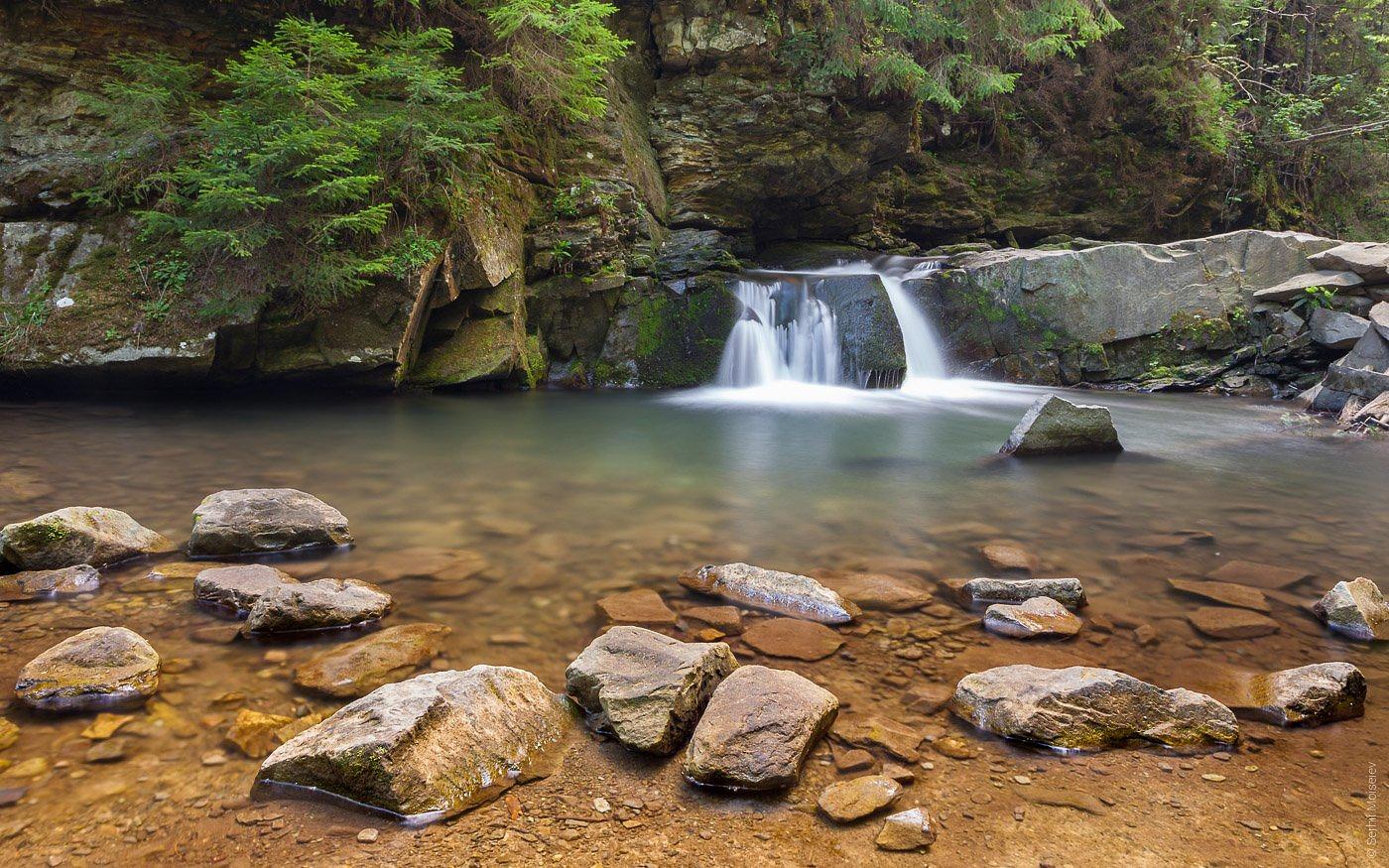
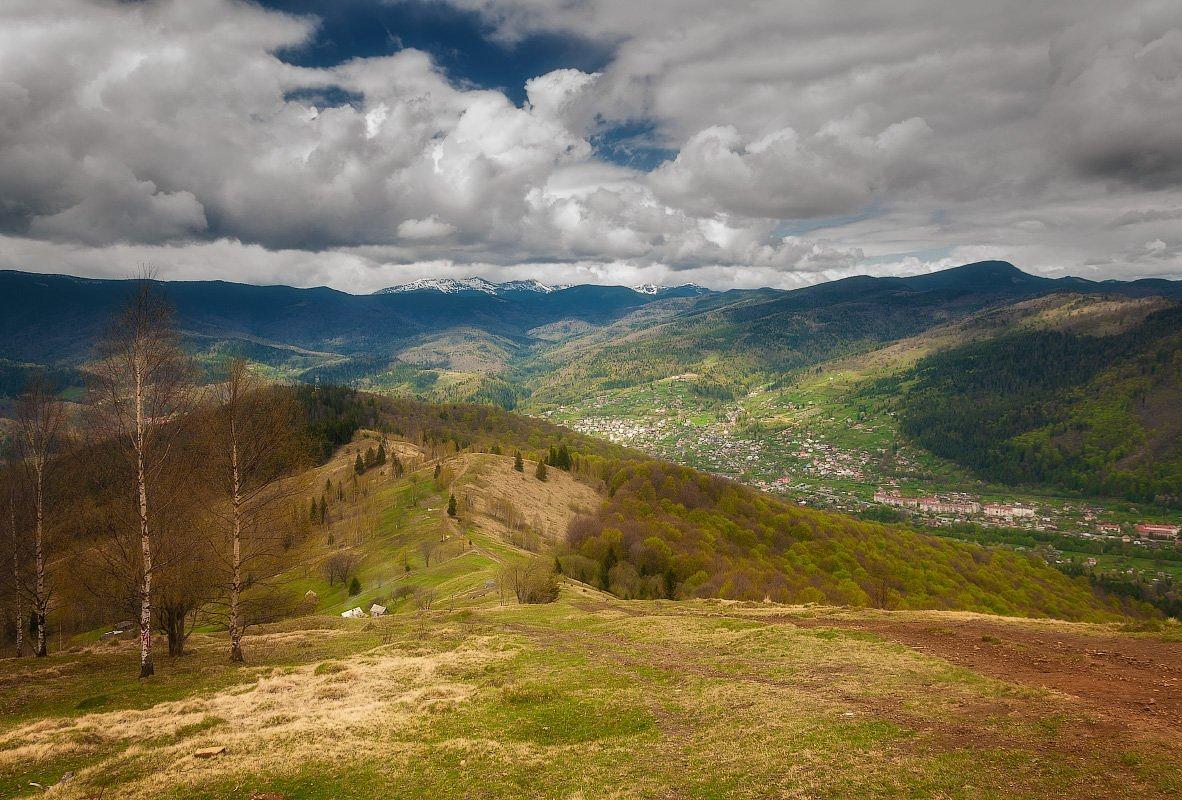
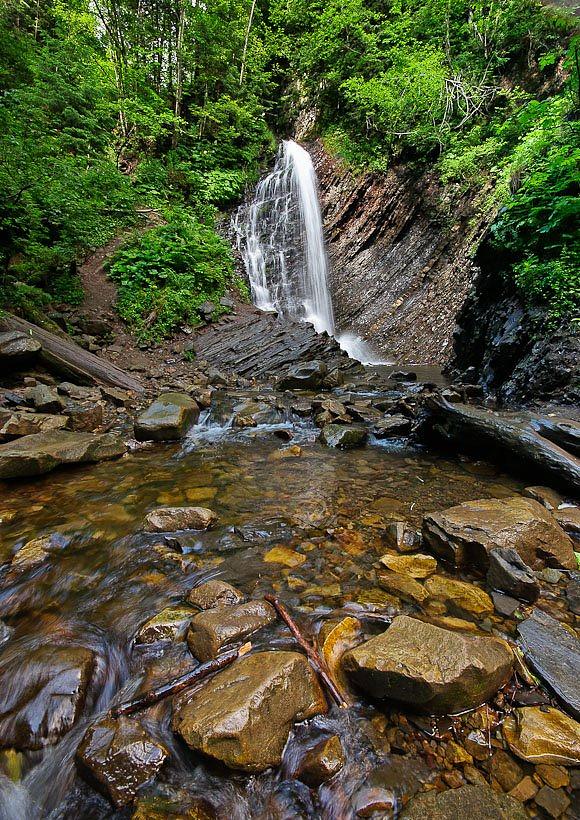
Everything harder starts a short drive out. Maiden's Tears (Divochi Slozy) is a small fall in beech woods where the walk in is most of the pleasure; Zhenetskyi Huk is higher, louder, further away and best after rain. Makovytsia is the town's own summit, a modest climb to a wide view back over the roofs. Mt Khomiak is the real hill day — a noticeably harder ascent, within reach of most reasonably fit walkers, and the answer if you want one proper mountain out of a Yaremche week.
Trains, roads, seasons
The train is the strongest single reason to pick Yaremche. Services on the Rakhiv line stop in the middle of town, so you arrive without a transfer, a taxi or a car at all. By road it is Ivano-Frankivsk, then the H-09 through Mykulychyn and Tatariv — the road most Carpathian traffic takes, which is why the town is busy and the onward day trips are easy. Every season works here: summer for water and forest, autumn for colour and thinner crowds, winter for snow and the ski resorts up the valley, spring for quiet. The thing Yaremche never is, is empty. Weekends and holidays fill it, and beds go early.
Base here, or further up the valley?
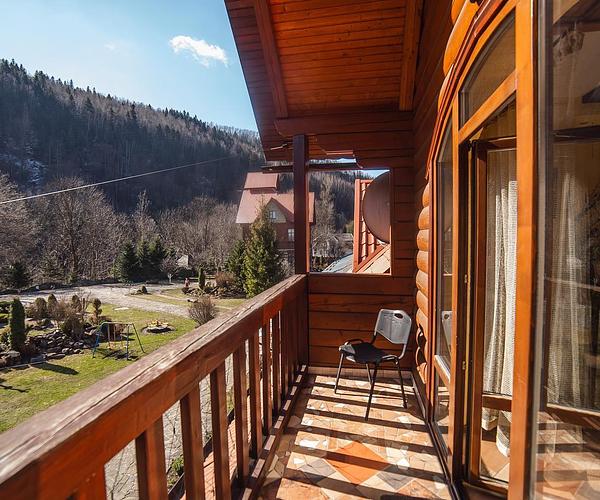
Stay in Yaremche if you are new to the Carpathians, travelling with small children, arriving by rail, or want a holiday that needs no organising in advance. Two nights covers the town and one hill; three lets you add Zhenetskyi Huk or Khomiak without hurrying.
Stay elsewhere if what you want is height. At 585m in a working valley town you are beside the mountains rather than in them, and the main road runs through your afternoon. For a trip built around Hoverla, Vorokhta — further up the same road — sleeps you higher and much closer to the trailhead. For lift-served walking and skiing on open grassland, cross the range to Pylypets. Yaremche's argument is a different one, and it holds: of the three, it is the only one that works with no plan at all.